|
|


 |
|
|
|
|
Abandoned Buildings
There's something about a ruin that
speaks to us all, I think you'll agree, and not just ancient ruins -
the charm of the dilapidated buildings of Venice needs no explanation to
readers of this site,
I hope. So here's a page devoted to the joy of ruin porn.
|
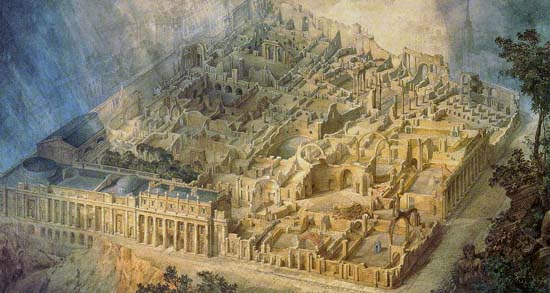
Christopher Woodward In Ruins A book dealing with the artist's, and the rest of our, joy in ruins, from lost ancient civilizations to The Planet of the Apes. This is the ruinophile's bible. We know we find them moving and fascinating - this book goes some way to explaining why. There's the intimations of death and the warnings against hubris, of course, but there's a whole lot more besides. The painting to the left is Joseph Handy's amazing view of the Bank of England as an imagined ruin. It features on the endpapers of this book and comes courtesy of the very wonderful Sir John Soane Museum. |
||
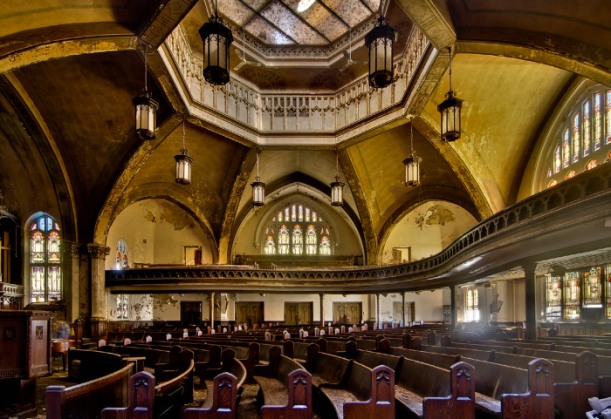
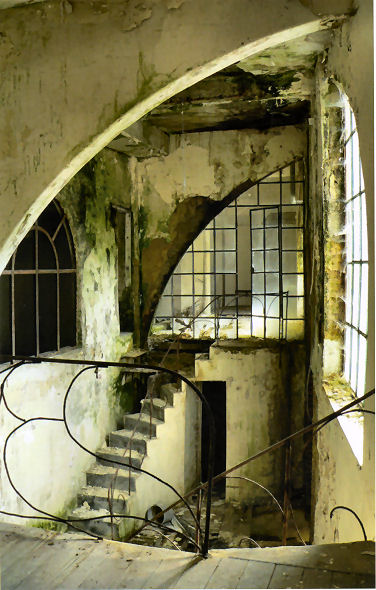 Sylvain Margaine Forbidden Places Exploring our abandoned heritage For a wider perspective...this book contains photographs of abandoned buildings across Europe and in America, but mostly in Europe, with a bit of a thing for Belgium. What sets this one apart from the small pile of books of derelict theatres and crumbling hospitals is the standard of the photography. Often these books contain photographs that one might politely call a straight record, but Mr Margaine knows his craft. (That's one of his to the right). The text tends to let the side down, though, with it's tendency to cringe-making 'poetry' but sometimes, though rarely, contains actual information. It's the superb photography that I'd strongly recommend you get this book for. Expertly composed with tastefully muted colours, but by no means monochrome, they make you want to get your camera out and get trespassing.
RomanyWG |
||
|
Henk van Rensbergen Abandoned Places 2 This is the second book from the man and the website that was in at the beginning of the whole UrbEx thing and showed the way as far as how good it could all look. It contains photos taken 2007-2010. His photographic style is straight, but he sure takes a mean snap - the balance between authenticity and artfulness is perfect. The places are well-chosen and varied and include some unusual choices, including a country road full of cars abandoned by the families of US servicemen in 1947. They were snowed up, taken away by train, and the road fell into disuse and the cars remained to rust and return to nature. There's also the pretty home of a tragic murderess, with family photos still on the wall and plastic flowers still in their vase. The text provides some pointless 'poetry' but also info and some insights into the tactics of the author, with the surprising thing being that he often now seems to get official assistance in his explorations, which is also a bit disappointing. A brief venture out of his Belgium-centric comfort zone takes him to Detroit, of course, and into some now-very-familiar places. |
Harry Skrdla Ghostly Ruins America's Forgotten Architecture I bought this one as it looked like it might explore avenues beyond the well-trodden Detroit routes. It does, and some of them are strange and fascinating, but it includes the usual sites from that city too. There's a lot of text, which varies from informative to purple to superfluous. The photos (all black and white) are variable too, with some nice old pics and some sharp stock shots, but mostly blurry recent ones courtesy of the author. A recommended purchase for only the most committed ruinophiles. |
|
 |
Chernobyl's Atomic Legacy 25 Years After Disaster Not an unusual subject and the photographs run the gamut of schools, hospitals, nature encroaching, abandoned dolls and shoes...the usual stuff, taken around the Chernobyl exclusion zone and mostly in the well-picked-over town of Pripyat. But the photos are excellent, by Daniel Barter (an architectural and abandoned-places photographer from the UK) and a fair few others. Also they include some less common photos of the vehicle graveyard, railway station, port and some less-usual panoramic views to add to the details and interiors. Click here for a 24 page preview of this book. |
|
|
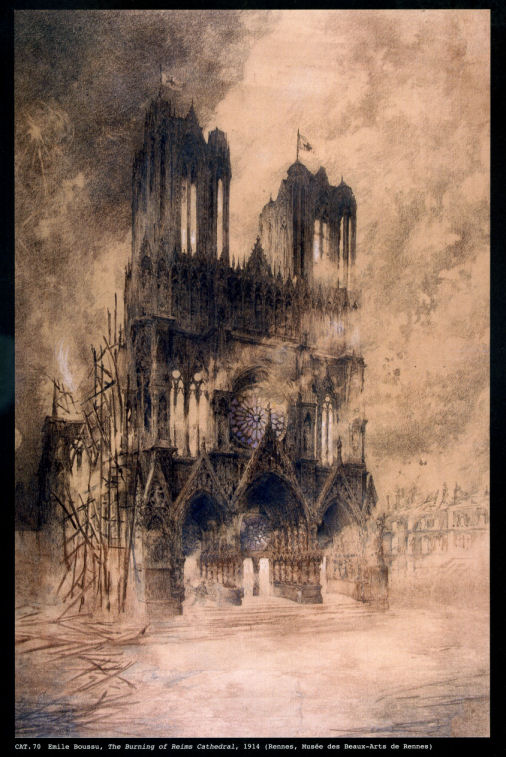
Ravaged: Art and Culture in Times of Conflict edited by Jo Tollebeek and Eline Van Assche This is a book derived from an exhibition of the same name held at the M - Museum Leuven from 20th March to 1st September 2014. I didn't see the exhibition but the book covers various topics related to iconoclasm and the looting and destruction of buildings and some of the background politics. It does this with brief essays and copious illustrations. The Leuven connection from which the whole enterprise springs is the setting on fire of the 14th Century Leuven University hall and its 18th Century library by German soldiers in 1914. One of the serious intents of the book is to show how countries at war attempt to subjugate their victims by eradicating their culture as well as taking their lives. That the joy of wallowing in the romance of ruins is not denied is a bit of a cake-and-eat-it situation, but it shows honesty too. The essays are mostly introductions to their subjects but each includes a bibliography. These subjects range from topics like Hitler's proposed Führer Museum at Linz and the Sack of Rome to less covered topics like vandalism in the French Revolution, colonialism and war tourism. The design and presentation of the book is trendily non-glossy with some fashionable font-mixing. And all is classically symbolised by the battle between Mars and Minerva, painted by the likes of Reubens. |
 | |
London | ||
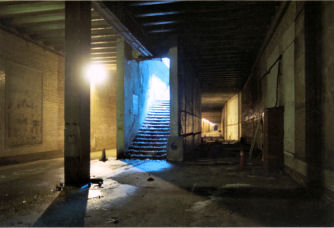 William Eckersley & Alexander Shields Left London This is a book of photographs taken in abandoned buildings in London by Eckersley and Shields and published by them. Factories, tunnels, swimming baths and hospitals, amongst other sites, all get wandered around and photographed by the pair. The photos are functional and mostly not, to be honest, overly arty or atmospheric. The style leans towards straight reportage, but there is often art in simplicity. It's good to see inside the Holborn Tram Tunnel (see left) but a shame it looks like a big hospital corridor. They don't shy away from evidence of illicit occupation either - there's lots of crap and graffiti in this book. I would've thought that making graffiti in a building where nearly no-one goes defeats the object, but the results are sometimes effective. An essential book for lovers of London decay, and a good website at www.leftlondon.co.uk where you can order the book.
| ||
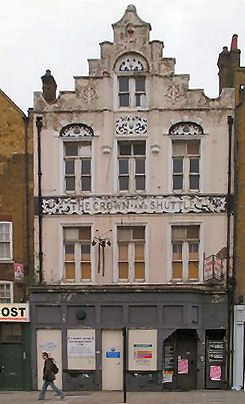
Paul Talling Derelict London This is the book of the website derelictlondon.com. It's small for a photography book, with text on the left-hand page and photos on the right. The text is laid out very annoyingly, and also annoying is the lack of street info for the sites. (I know I've walked past the pub pictured left many times in my early life in Hoxton, but I'm totally unable to remember where it is.) The photos are pretty atmospheric, though, covering all the major and minor run-down sites and categories, and the book is very nicely produced. Overgrown cemeteries, closed tube stations, empty swimming baths and long-un-drunk-in pubs all feature, as well as some underelict places that still push the mystery and crumble buttons, like the Citadel in Horse Guards Parade and the deep-level shelters on the Northern Line. So, a fine and compact intro to London's less- 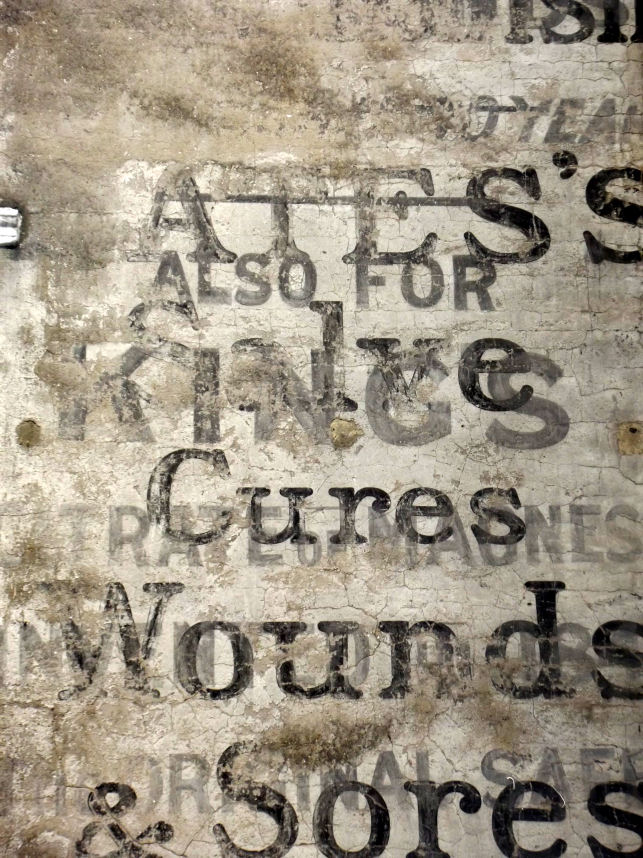 loved
buildings. loved
buildings.
Helen Cox |
||
|
Detroit |
||
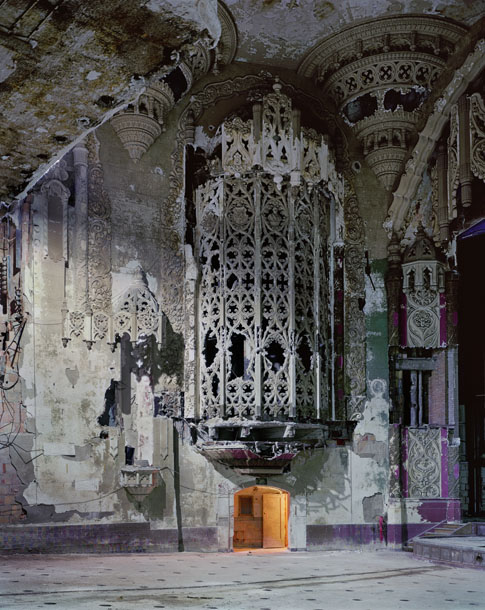 Yves Marchand and Romain Meffre The Ruins of Detroit This big expensive book is fast becoming the standard photographic work in its subject. It also gives us more facts and info than one might expect from such a plush volume, and the photos are most fab. I've seen and read enough to have garnered most of the stages and causes in the city's slow fade - the decentralisation and decline of the motor industry and the white flight to the suburbs being the biggest - but I hadn't realised that the blight began setting in quite so early, with some buildings falling into disuse in the late 1950s. All the usual buildings are here, along with enough others to quell any doubts that maybe the decline is confined to a few well-picked-over sites.
|
Andrew Moore Detroit Disassembled The Thatcher government's policy in the 1980s of closing psychiatric hospitals and then dumping the inmates on the streets (aka 'care in the community'), the Chernobyl disaster, and the slow death of Detroit - without these three phenomena the current crop of photographic books of rust and ruin would be very much the sparser. This one concentrates on Detroit and tends towards the realistic end of the arty/reportage scale. Which is not to say craft and art have not gone into them, just that they haven't been processed into the fakery look of some pics we could mention, and review books of. The decline and decay of the city of Detroit has been much filmed and photographed in recent years, and has become symbolic of many things - the power of nature, the growing dominance of China, America's racist social policies, the decline and hubris of Western civilisation...take your pick. But all through this lots of photos are being taken too - it's coming to be known as detritus porn. This is my first book devoted to the place, and it's a good place to start. It feature a lot of what seem to be becoming the iconic wrecks and illustrates most of the developing themes, not the least how all these buildings full of nickable stuff seem woefully unlooted. Except for the scrappers - the strippers-out of copper pipes and such. It's also big and well-produced, not too expensive, and doesn't descend into the poncey poetic commentary that often blight this type of book. Mr Moore's photos are online too. The one to the left is of the organ screen of the United Artists Theatre. 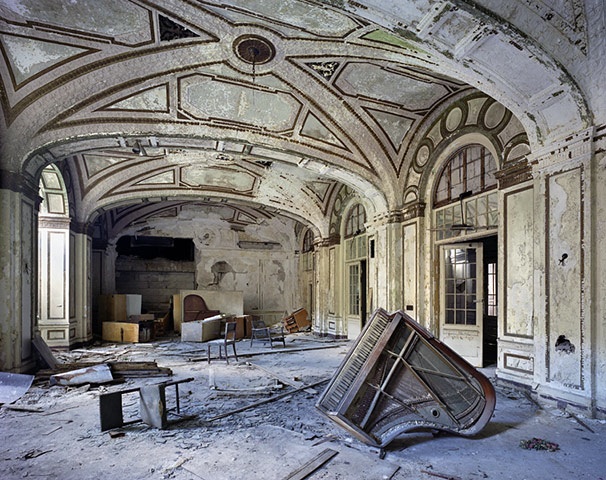
Dan Austin, with photographs by Sean Doerr Lost Detroit: Stories Behind the Motor City's Majestic Ruins This more manageable volume has plenty of photos, but is more a factual and readable guide to the twelve prime sites that'll be familiar if you've looked through the two books above, amongst others. And the scenes of sad ruin are sometimes placed against black and white photos of better days. Tales of buck-passing owners, planners and authorities abound. Mark Binelli The Last Days of Detroit 2013 And for when the ruin porn is not enough and you want to find out wtf is actually going on. This provides engaging and unaxgrinding coverage of the history and the issues which doesn't flinch from the ever-present racial dimensions or identifying the frequently corrupt politicians of all shades. It takes events well into 2012, with no real solutions to the city's woes anywhere in evidence. With all the blinkered attitudes, corruption and incompetence on display it's rarely a heart-warming read, but it does at least make you glad that you don't live there. |
|
|
A fine web-site (and one of the earliest) devoted to European
urban exploration is abandoned-places.com,
Take nothing but
photos, leave nothing but footprints.
|
||
|
Hermione Hobhouse
|

|
|
|
|
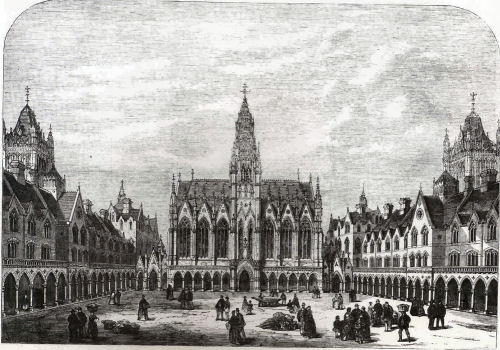
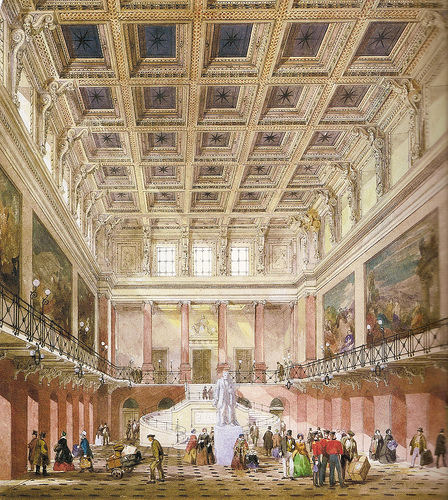
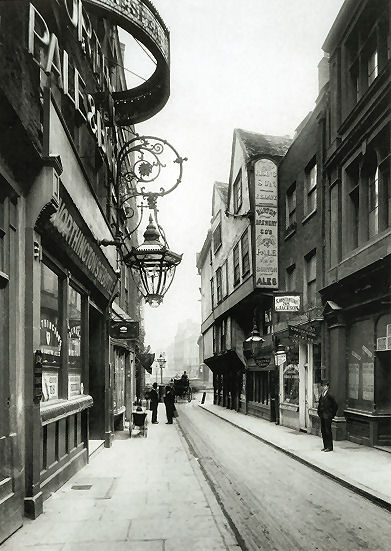
Philip Davis Lost London 1870-1945 2009 Published by English Heritage as a showcase for their collection of photographs of London taken between the dates in the title, this is a book that has leapt swiftly onto my boatful to take to my desert island. These previously unpublished photographs come originally from the London County Council collection taken as historical record for the Survey of London, to preserve images of buildings and neighbourhoods about to be redeveloped. This collection passed to the Greater London Council, and it was when the malignant force that was Margaret Thatcher saw to the GLC's demise that the collection passed to English Heritage. The ordinariness of the intention is utterly exceeded (as with the photographs of Paris taken by Atget) by the wonderfulness of the results. Nostalgia and the sadness of the losses no doubt play a large part, but the images are so sharp and full of fascinating detail. There are shops covered in marvellous old signs and adverts, and this is a time when prices could be painted on windows and walls, so slow were they to change. The people who stare out from the groups that gathered when the photographer appeared are recognisable types that I, for one, grew up with. Or they've moved whilst the photo was being taken and appear ghostly. There are pages devoted to the famously-lost, like the Adelphi, the coaching inns, the Mayfair mansions and the Columbia Market in Shoreditch, and of anonymous and picturesque terraces. Philip Davis's captions and introduction are readable and elegantly informative, but he does not allow us to too-rosily ignore the squalor and suffering behind the quaint tumbledown houses. He's also keen to stress how the sad losses led to opinion, and the legal system, preventing later atrocities and the halting the wholesale losses of Georgian and Victorian buildings. But that didn't help during the Blitz. There are also lots of pages devoted to the losses in the Holborn/Strand area during the congestion-easing creation of Kingsway. The secondary need was to clear away some of the worst rookeries of the time, but the losses to the ancient fabric of the city (like Wych Street left) were many and heartbreaking. I love this book - can you tell? |
|
|
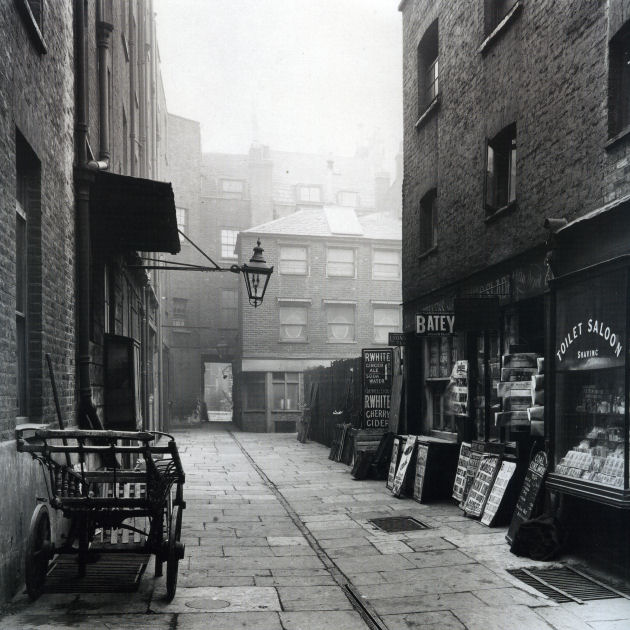
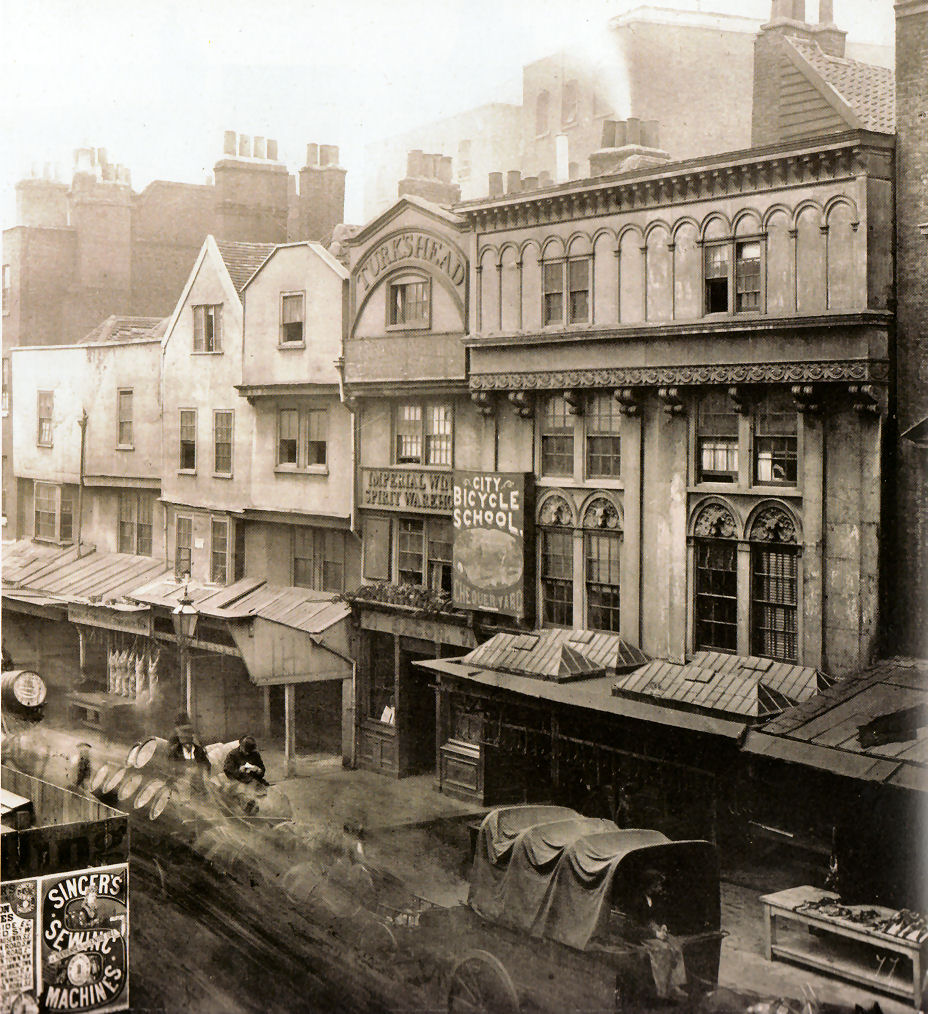
Philip Davies Panoramas of Lost London 2011 Following the phenomenal success of the book above, comes a big and even more immersive successor. (There have been some exhibitions in between too, which passed me by completely, and mysteriously.) It needs to be said that this book duplicates 180 photos from the previous volume, adding 100 new ones, but as you might guess from the title this is a bigger book and it's in landscape rather than portrait format. So, even more than its predecessor, it's as close to a time-travelling virtual-reality tour of Edwardian London as you could hope for - all unvarnished reality, fog and horse dung. And shop signs and posters and adverts a-go-go! The larger and sharper (and tweaked?) photos give us even more joy of lettering this time. Edwardian London really was a place where the walls and windows shouted at you, almost all the time it seems. There's many a mystery too, like what did all the purveyors of horse feed and bedding do when the use of horses so rapidly declined, why don't you get peacock feather shops anymore, and why did R. White's stop making their clove flavour drink? The Work, Poverty and Change chapters are troves to treasure, the Wealth section less so, as it's mostly the kind of Country Life photos of demolished glitzy interiors we've seen elsewhere. And some of them are even undemolished. There's another fine selection of views of long-gone Wych Street and Holywell Street too. The latter being the then centre of naughty book provision in London, the photos show chaps clustered at certain windows and no women visible. Personal pleasures include two photos of Broadway Market, around the corner from where I was born 50-odd years later, and a truly grimy shop in Pitfield Street, near where I lived and very near where I worked, for years. But there's really fascination and revelation on every page. |
|
|
 |
|
|
|
...and further afield |
||
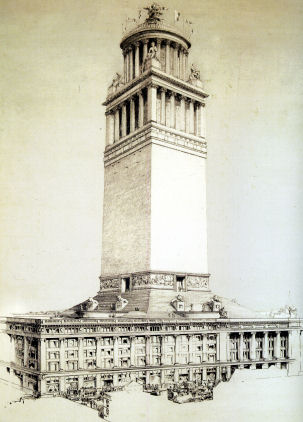 |
Jonathan Glancey Lost Buildings The London pages in this book cover a lot of the same ground as some of the books above - the Euston Arch, The Adelphi, The Old London Bridge, Columbia Market, and such. But Glancey also takes us to sad architectural losses in Iran, Russia, America and Australia. The range is impressive, then, and the pictures are gorgeous - worth the price of the book in themselves. Which is just as well, as the text is ... well, weird. It's committed and often angry, yes, but it's also strangely hand-holdingly juvenile, like this was first intended to be a book for children, which seems unlikely. This is puzzling rather than a deal-breaker and this is still an essential book on the subject. It even stretches to places which never existed, like Atlantis, Gormenghast, Piranesi's prisons and Fritz Lang's Metropolis. Amongst the buildings never built is the huge tower addition to the Selfridges store in Oxford Street (pictured left) planned by Philip Armstrong Tilden in 1918. As Glancey comments: 'What fun.' |
|