the list 
reviews

non-fiction

 books to love 

films
  
comics

Constance Fenimore Woolson and Henry James in Venice


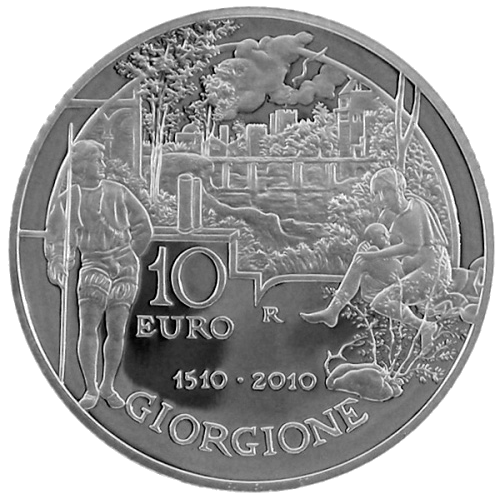
The Garden of Eden

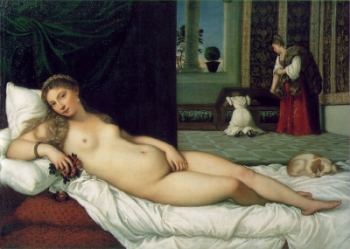
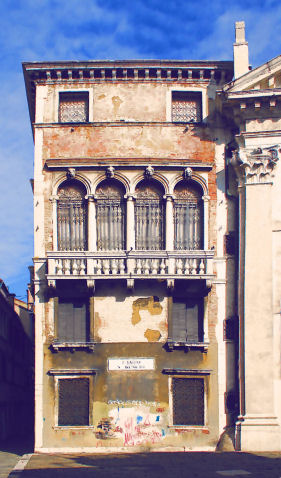
Doors & Windows     Venice & Cats

Vivaldi

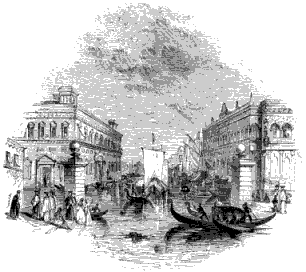
The Dilapidated Ospedale
al Mare on the Lido

and my trips in
2002  2005  2006 
2007(1)    2007(2)
2008  2009
 2010

click on the lulu button below to buy a luscious book of my trip reports
Support independent publishing: Buy this book on Lulu.


The essence of fictional Venice is dampness, shadows, and decay.
Characters in novels set in Venice often go there to die, by design or by chance. So picturesque funerals with floating hearses are far from unusual. Deception and the not-what-they-seemness of things is another not uncommon theme for stories set a city famous for its Carnevale and masked intrigue.


Casanova is a popular subject, as the foremost native exponent of Venice's other famous activity - the pursuit of pleasure. The city's famous learned courtesans once attracted as many visitors as did its more refined pleasures. Antonio Vivaldi is another of Venice's famous sons and 2007/8 saw three novels and two plays all concerned with the women in his life and those he taught at the Pieta.


A-D
Aarons, Edward S. Assignment: the girl in the gondola 1969
Adelson, Dorothy Cupid in Venice 1955
Adler, Elizabeth Meet me in Venice 2008
Aldington, Richard The romance of Casanova 1947
Alison, Jane The marriage of the sea
Allen, Michael
Mr Fenman's Farewell to His Readers
Andahazi, Federico
The Anatomist
Andersch, Alfred  Red-head 1961
Appiah, Anthony Another death in Venice 1995 crime
Appleby John Venice preserve me 1954

Ballia, Mimma Ruskin's Rose: A Venetian love story
Balzac,
Honoré de Massimilla Doni
Baron, Alexander Strip jack naked 1966
Barr, Emily The Perfect Lie
Beamish, Noel de Vic Venetian lady
Beaufort, Roxane
Stranger in Venice
Beaussant, Phillipe Rendezvous in Venice

Begley, Louis  Mistler's Exit
Benzoni, Juliette Marianne and the rebels
Berto, Giuseppe. Anonymous Venetian
Bhabra, H.S. Gestures
Bowen, John The birdcage
Bowes, Florence Interlude in Venice
Bradford, Barbara Taylor A secret affair
Brandreth, Gyles Venice midnight
Brent, Madeleine. Tregaron's daughter
Britt, Katrina Strange bewilderment romance
Brodkey, Harold Profane friendship
Brophy, Brigid King of a rainy country
Brophy, Grace  
A deadly paradise

Calvino, Italo
Invisible cities
Campbell, David Venetian holiday
Canning, Victor Venetian bird
Carlotto, Massimo The Colombian Mule
Carroll, Stephen Venetian cousins
Carroll, Steven
Twilight in Venice
Carson, Anthony Any more for the gondola? 1950
Cartland, Barbara Golden gondola
Caudwell, Sarah Thus Was Adonis Murdered
Charles, Edward Daughters of the Doge
Chase, James Hadley See Venice and die
Cleveland, David Adams With a gem-like flame a novel of Venice and
a lost masterpiece
Coker, Carolyn  The hand of the lion
Collins, Pat Lowery Hidden Voices: The Orphan Musicians of Venice
Collins, Wilkie The haunted hotel
Cooper, James Fenimore The bravo download
Coover, Robert Pinocchio in Venice
Corona, Laurel
The Four Seasons: A novel of Vivaldi's Venice 2008
Cowan, James
A Mapmaker's dream
Coxhead, Nona Passionate search
Crawford, F. Marion Marietta: a maid of Venice

Dacre, Charlotte Zofloya
D'Annunzio, Gabriele The Flame (of Life)
Davies, Frederick Snow in Venice
de Blasi, Marlena A thousand days in Venice
de Facci, Liane Venetian years 1961
de Guise, Elizabeth  Bridge of sighs 1992
Delalande, Arnaud  The Dante trap 2007
Dessaix, Robert
Night letters
Dibdin, Michael
Dead lagoon
Dingwell, Joyce Venice affair romance
Disraeli, Benjamin Contarini Fleming
Dowling, Gregory Every picture tells a story
Drake, Shannon Deep midnight
DuMaurier, Daphne Don't look now
Dunant, Sarah
In the company of the courtesan
Duncan, Dave
The alchemist's apprentice
The alchemist’s code
The alchemist's pursuit
Dyer, Geoff Jeff in Venice, Death in Varanasi


E-H

Ehrlich, Max Reincarnation in Venice
Elegant, Robert Bianca
Eves, Douglas Jane 1984
Eyre, Annette Venetian inheritance
Eyre, Elizabeth Dirge for a Doge

Fermine, Maxence The black violin
Ferrand, Georgina Assignment in Venice
House of glass
Fiorato, Marina  The Glassblower of Murano
Fleming, Caroline Dark Venetian
Fleming, Ian
Risico (in For your eyes only)
Friedman, Mickey Venetian Mask
Frutkin, Mark The Lion of Venice
Fuller, Anna  A Venetian June
Funke, Cornelia
The Thief Lord
Furness, A Some day I'll find you

Gash, Jonathan The gondola scam
Geddes, D. Grant Artifact: a Peter Grant mystery
Gibbs, Mary Ann Most romantic city 1977
Gielgud, Val In such a night...
Girardi, Robert
Vaporetto 13
Godden, Rumer Pippa passes
Golden, Christopher and Tim Lebbon The Chamber of Ten
Golding, Michael Simple prayers
Goldman, William (as S. Morgenstern) The silent gondoliers
Goodwin, Jason The Bellini Card
Grant Geddes, D.  Artifact: a Peter Grant mystery
Grenville, Hilary Appointment in Venice
Grey, Shirley Month with Cousin Garnet 1975
Griffin, Nicholas  The Masquerade
Griffiths, Paul  Myself and Marco Polo
Guinness, Bryan A fugue of Cinderellas 1956

Habe, Hans Palazzo
Hammond, Jane Silver Madonna
Harcourt-Smith, Simon The heart of a Rose
Harris, M. Pandora's Gallery
Hartley, L.P.  Eustace and Hilda
Simonetta Perkins
White Wand, and other stories
Hayes, Karen A patch of green water
Haythe, Justin The honeymoon
Healey, Ben Last ferry from the Lido
(aka Midnight Ferry to Venice?)
Stone baby
The Vespucci papers
Hemingway, Ernest Across the river and into the trees
Henty, G. A The Lion of St. Mark: A tale of Venice
in the 14th Century
Hewson, David
Lucifer's shadow (aka The Cemetery of Secrets)
The lizard's bite
Hickman, Katie  The Pindar Diamond
Highsmith, Patricia The Talented Mr. Ripley
Those who walk away 
The rat of Venice
(in The Animal-Lover's Book of Beastly Murder)
Hill, Reginald Another Death in Venice
Hill, Susan The man in the picture 2007
Hodge, Jane Aiken One way to Venice
Hoffman, E.T.A. Doge and Dogaressa (in Tales of Hoffman)
Hoffman, Mary Stravaganza - City of Masks 
Hofmannsthal, Hugo von Andreas
Holme, Timothy Devil and the Dolce Vita
Funeral of gondolas
Gondola Gondolier

Hunt, Dorothy Ashes of Achievement 1959

I-L
Inchbald, Peter Short break in Venice
Ishiguro, Kazuo Nocturnes
Jacobs, T.C.H. The secret power
Jaffe, Michele The Stargazer
Jakeman, Jane In the city of dark waters
James, Henry Travelling companions (short story)
The Aspern papers
(short story) download
The wings of the dove
The pupil (short story) read/download
Johnston, Velda Masquerade in Venice
Jones, Belinda The love academy 2007
Jong, Erica Serenissima
Shylock's Daughter: A novel of love in Venice

Kanon, Joseph Alibi
Keates, Jonathan Allegro postillions
Keene, Carolyn Nancy Drew 72: The Phantom of Venice
Kininmonth, Christopher Maze
Kitchen, Paddy Blue shoe
Kraus, Robert The gondolier of Venice

Lackey, Mercedes, et al The Shadow of the Lion
Laker, Rosalind The Venetian mask
Lamb, Charlotte Deep and silent waters
Langton, Jane The Thief of Venice
Laurents, Arthur The time of the cuckoo play
(filmed as Summertime)
Lee, Tanith Faces under water
Saint Fire
A Bed of Earth
Venus preserved

Leon, Donna Death at La Fenice
Death in a strange country 1993
A Venetian reckoning (aka Death and judgment)
An anonymous Venetian (aka Dressed for death)
Acqua Alta (aka Death in high water)
The death of faith (aka Quietly in their sleep)
(Strange that the American titles seemed to have been
changed to include the word
death, until one came along
with death already in it!)

A noble radiance
1998
Fatal remedies
1999
Friends in high places
2000
A sea of troubles
2001
Wilful behaviour
2002
Uniform justice
2003
Doctored evidence
2004
Blood from a stone
2005
Through a glass darkly
2006
Suffer the little children
2007
The girl of his dreams
2008
About Face
2009
A Question of Belief
4.2010
Leviant, Curt Partita in Venice
Lewis, Matthew Graham The Bravo of Venice download here
Lewitt, Shariann Interface masque
Lindsay, Rachel Affair in Venice
Lovric, Michelle Carnevale
The floating book
The remedy
The Undrowned Child
The Book of Human Skin
The Mourning Emporium
Orion Children's 10.2010
Low, Ona Murky shallows : a story of the Venetian lagoon
Lutyens, Mary Meeting in Venice

M-R
MacInnes, Helen Venetian affair
MacCauley, Kay
The Man Who Was Loved
McCutcheon, Hugh Comes the blind fury
McEwan, Ian
The comfort of strangers
Magrs, Paul
Doctor Who - The Stones of Venice
Mann, Thomas Death in Venice
Mantle, Jon Arkin, or life in Venice
Marchant, William Gondolier
Marshall, Raymond Mission to Venice
Martines, Lauro
Loredana: a Venetian tale
Masson, Sophie The Madman of Venice
Mather, Anne Prelude to enchantment
Maybury, Anne Ride a white dolphin
Meyer, Kai The flowing queen
Mordden, Ethan The Venice Adriana
Murphy, Haughton  A very Venetian murder
Murphy, Lisa Jean 
The Red Priest of Venice play
Murray, Frances Heroine's sister
Myers, Beverle Graves Interrupted aria
Painted veil

Napoli, Donna Jo Stones in water
For the love of Venice
Daughter of Venice

Nelson, Karen Tea and tiramisu
Newmark, Elle Bones of the dead
The Book of Unholy Mischief

Ongaro, Alberto Excelsior
Ozcan, Ashkin The Second Venice

Palandri, Enrico Ages apart
Pargeter, Edith Holiday with violence
Pasinetti, Pier Maria Venetian red
From the Academy bridge

Pears, Iain
The Titian Committee
Pemberton, Max Beatrice of Venice 
Pendower, Jacques A trap for fools
Percival, Julia and Pixie Burger A ball in Venice
Phillips, Caryl The nature of blood
Phillips, Christi 
The Rossetti letter
Pincher, Chapman The four horses
Pozzessere, Heather Graham The Di Medici bride
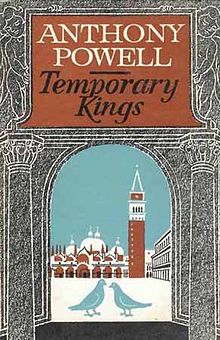
Powell, Anthony Temporary kings
Prada, Juan Manuel de 
The Tempest
Pressler, Mirjam Shylock's daughter
Pressley, Hilda Venetian love song
Printer, Amanda The Cabalistic
Proust, Marcel In search of lost time
Purves, Libby More lives than one
Quackenbush, Robert Gondola to danger
Quick, Barbara Vivaldi's virgins
Quinn, Thomas
The Lion of St Mark
The Sword of Venice

Raven, James Venice ultimatum
Raven, Simon Survivors
Rhodes, Anthony A ball in Venice
Rice, Anne  Cry to Heaven
Ricketts, Ralph Henry's wife
Ringo, James
Uncle Theodor
Rivière, William A Venetian theory of heaven
By the Grand Canal

Roberts, Cecil Guests arrive
Robertson, Colin Venetian mask
Rolfe, Frederick The desire and pursuit of the whole
Three tales of Venice
Romijn, André 
Hidden harmonies: the Secret Life of Antonio Vivaldi
Rosner, Paul Terror in Venice
Rowan, Hester Overture in Venice
Rudorff, Raymond The Venice plot
Runcie, James 
The colour of heaven
Rylands, Jane Turner Venetian stories 2003
Across the Bridge of Sighs 2005


S-Z

Sager, Gordon The rape of Europa: A Venetian fantasy
St Aubin de Terán, Lisa The Palace
Salisbury, C. Dark inheritance
Sallis, Susan Four Weeks in Venice
Sand, George Consuelo: A Romance of Venice
The Mosaic Workers
Leone Leoni

Sanders, Madelyn Under Venice Harlequin
Sarasin, J.G. Eighth wonder
Schiller, Friedrich von The man who sees ghosts
Schnitzler, Arthur Casanova's homecoming
(a.k.a.
Casanova's Return to Venice)
Scott, J.M. Touch of the nettle
Sedgwick, Marcus The Kiss of Death
Seth, Vikram
An equal music
Simenon, Georges The Venice train
Sklepowich, Edward
Death in a serene city
Farewell to the flesh
Liquid desires
Black bridge
Death in the Palazzo
Deadly to the sight
The last gondola 
2003
Frail Barrier
2008
The Veils of Venice
2009
Smith, Catherine Barozzi, or the Venetian sorceress
Smith, Kay Nolte Venetian song
Sollers, Philippe Watteau in Venice
Spark, Muriel
Territorial rights
Spender, Stephen Engaged in writing
Spina, Michele West of the moon
Sterling, Thomas Evil of the day
Stewart, Sally The enchanter's wand
Strutton, Bill Glut of virgins
Symons, Julian The criminal comedy of the contented couple

Taylor, Don Daughters of Venice Radio play
Thomson, Daisy Hello, my love
Thorne, Anthony Young man on a dolphin
Tiffany, Grace The turquoise ring
Timperley, Rosemary Cat-walk
Walk to San Michele
Tournier, Michel Gemini
Trace, Jon The Venice Conspiracy
Turk, Frances Lamp from Murano
Turnbull,  Mrs. Lawrence The Golden Book of Venice download
Unsworth, Barry 
Stone Virgin
Vickers, Salley
Miss Garnet's angel

Walker, Kathryn A Stopover in Venice
Wallace, Irving Pigeon project
Weisgall, Deborah The World Before Her
Wentworth, Sally The hawk of Venice romance
Wheatley, Dennis The rape of Venice
Whittington, Mark & Chantal Nocturne
Whitson, Denton For the glory of Venice
Whyte, Christopher The cloud machinery
Wiggs, Susan  Lord of the Night
Wiles, John  Killing Casanova
Williams, Jim
Scherzo
Wilson, Andrew The lying tongue
Wilson, Barbara
The Case of the orphaned bassoonists
Winterson, Jeanette The passion
Wright, Daphne Never such innocence


Michael Allen
Mr Fenman's Farewell to His Readers

If I start by stating that this is literary fiction I don't mean that it might win the Booker Prize, but that it's a story that's all about writing. It tells of a popular, but not literary, author's formative trip to Venice in 1786. He meets a French woman who is, of course, mysterious and who becomes his muse and lover. She guides his hand, in much detail, in the construction of his first novel and another part of his anatomy...but here there's much less detail. Then she disappears. The style is very much no problem and the detail convincing, although Venice is there in our minds rather than in the author's descriptions. I enjoyed the book a lot, but the plot left me feeling a bit disappointed in its lack, for me, of resolution. But you don't have to rely on my opinion because even if you don't want to buy this in paperback from www.lulu.com you can get it as a free PDF download from Kingsfield Publications and make up your own mind. There's also an online 'review' which conjects about the nature of the 'truth' of the existence of Mr Fenman.

Federico Andahazi  The anatomist
Renaissance physician Mateo Colombo is looking for the way to a woman's heart, and discovers the clitoris. He is branded as a heretic and charged with witchcraft. He looks back on the inspiration for his quest, and the course of his experimentation from his pre-trial confinement. His progress and its relation to the contemporary attitudes towards women, make fascinating reading and, although not described much, Venice makes an appropriate backdrop.  It's the wicked libertine version of Venice this time, complete with decadent parties with the men in fashionably transparent hose showing off their genitalia, with ribbons and bells attached. The arrival of the object of our hero's obsession sets up a fair old tinkling.

Federico Andahazi also wrote 
The Merciful Women


Mima Balia
 
Ruskin's rose - A Venetian love story
This book is a plush but thin thing, with well spaced text, telling of John Ruskin's famous late-in-life infatuation with young Rose La Touche, and suggests that he found solace from the relationship's non-consummation, and her death, in the paintings of Carpaccio. In particular the St Ursula paintings, which tell the story of a doomed virgin, you see.  (The really interesting fact about St U, though, is that the story of her taking 11 thousand virgins on a trip to be slaughtered is the result of the misreading of a letter - the copyist interpreted the M in ' 11M' as a Roman numeral and not just standing for 'martyrs', as seems much more likely.) It's a pretty theory, and a pretty book, but the prose is a little purple in places, and you'll read it in no time. The wonderful St Ursula paintings are even reproduced in here, to pad the slim volume out a bit. 

Honoré de Balzac Massimilla Doni
This is a slim volume, currently only immediately available, via the Book Depository, from the Dodo Press, who print up copies of rare books as they're ordered, it seems. It's the story of love in Venice, involving a Duchess, her lover, her husband The Duke and his protégé the opera singer, who has a night of passion with the Duchess's lover, who is then riven with guilt, etc. The style is considerably more florid than I remember from past Balzacs, being lustrous in style to the verge of the Gothic. But it's all still pretty enjoyable and very Venetian, with much talk of the state of the country, and music - boy, is there talk of music! A quarter off the book is taken up with the Duchess talking a French visitor through a Rossini opera, and it's all very skippable, for me anyway, but at least it chimes with the novel's overall key theme of transcendence, be it in love, music, or opium. A treat for fans of Italian opera and Rossini but slim pickings for the rest of us.


Louis Begley
Mistler's exit
In which a rich man diagnosed with soon-terminal cancer goes (surprise, surprise) to Venice and has sex with a pushy and randy female photographer and a woman he fancied at college. Pardon my terse précis but the gushing reviews plastered on this one made me expect much more than I got. The comparisons to Henry James I put down to the Venice setting and the long sentences. The comparisons to Proust can only be put down to drugs or madness. The first half contains some truly tedious stuff dealing with the finer points of squeezing as much cash as you can out of a  company which is buying your company. (Now you never know when that knowledge is going to come in handy do you?) I expected this soulless tedium to serve as some contrast with the man of depth and feeling he becomes, but nothing so obvious or inspiring transpires. He stays a prick despite wandering around some fine Venetian art, locales and canals. It may be an American thing, because as a Brit I find a character who we're supposed to admire because he made lots of money rather hard to take. He agonises a bit over the choices he's made and the things he's done to people but truly regrets not a jot. Didn't like him, didn't like the book.


H. S. Bhabra Gestures
Well, here's an odd one. It reads like a very snobbish novel from the middle of the last century, but it was written in the 1980s. Our narrator is lifelong diplomat Jeremy Burnham - who describes himself as a plain and dependable man - recalling his life from old age. His story begins in Venice in the 1930s with fascism on the rise, and tells of the callow and self-important new diplomat's contact with some seductive and secretive people. A tragedy at that time then propels us to the end of the war and his posting to Amsterdam, where one of the group he met in Venice reappears and things turn bad again. The class values and snobbishness are part of the character of the (unreliable) narrator, of course. The author was of Indian birth, brought up in England, and lived in Canada where he presented a TV program about books in Ontario. This is his only book and he died in 2000. The literary quality is here a definite cut above and the Venice atmosphere in the first half is authentic and effortless. The time of setting is pretty uncommon for Venice-set novels and given the period you'll not be surprised that anti-semitism is a recurring theme. An occasional tendency to get a bit carried away with the philosophising is the only price you pay for a book of real emotional depth and perception and grip.


Joseph Brodsky Watermark
In which the Nobel Prize-winning poet tells us of his love for Venice in winter and makes obvious the depth of this love.  The forty-eight short chapters tell stories, describe places and remember feelings.  This is more biography than fiction , I think, but the life takes second place to the place. There's much evocative description and some memorable images in this short book. My favourite is the bit about the Venetian winter fogs, which are so thick that if you do pop out to shop you can find your way back through the tunnel your body carved through the fog on the way out. A more accessible and straight-forwardly Venetian alternative to the Calvino below. 
With thanks to kind correspondent Marzena Bomanowska for the recommendation.

Grace Brophy A deadly paradise
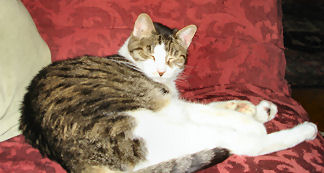
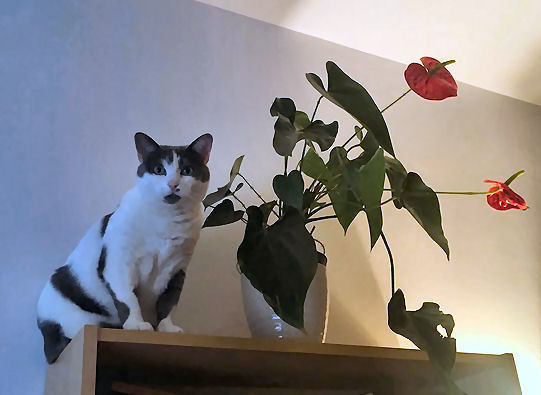
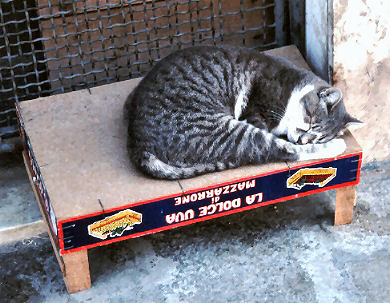
A reviewer on the cover compares Grace Brophy to Donna Leon, of course, but it's more interesting to spot the ways in which they differ. Commissario Cenni is not a family man - he's more your troubled and obsessed loner, but he thankfully doesn't write poetry or have a thing for the opera. (He does have  a cat though, called Rachel - see left) As a character he'll remind you more of Michael Dibdin's Aurelio Zen and the story has a more muscular feel and more nastiness and bad people than Donna Leon gives us. The story progresses, revealing the life stories of the characters, good and bad, as Cenni investigates the murder and mutilation of a German woman who had been a diplomat, a blackmailer, bisexual, and nasty piece of work. The Commissario follows the trail of the victim's visitors and lover to Venice, where his own past and demons get a good stirring-up too. The lives and secrets reveal in a smooth, compulsive and faultless fashion and later there's another visit to Venice, and cats prove crucial. I loved this book.


Italo Calvino Invisible cities
Marco Polo sits on cushions in the Kublai Khan's garden telling the aged Emperor about the cities he has visited, calling upon memory and imagination to dazzle and perplex us with their messages and identities.  Each city evokes aspects of Venice without ever having places in them which share either the name or appearance of places in Venice. It is about Venice inasmuch as all the cities described reflect Marco's experience and knowledge of the city of his birth.  So, not a book directly about Venice, but a book central to this site's idea of cities as things of the mind and heart, as well as of stone and water. Not an easy read, though. Key words: stilts and elephant

Steven Carroll Twilight in Venice
Things did not start well for me and this book. Firstly the blurb on the back tells us of the former virtuoso cellist whose noble line is set to end with him and who lives in a 'once beautiful piazza'. No, he's not a wealthy street person, they mean palazzo. But that's not the author's error, no the author's error is to have this aged musician leaving Florence in the first chapter and have him looking from the steps of the railway station back to the church of Santa Sophia
Novella. Then there was the fact of the musician being called Fortuny, which for anyone steeped in Venice is a recipe for confusion between frocks and cellos. But pushing all this behind me I persevered, and found the novel enjoyable, if not overly deep. It tells of a young woman's idolisation of said cellist and how it all goes when she eventually meets him. It goes from a teacher-pupil relationship onto a warmer friendship and then onto the hot stuff basically. The treatment of the theme of the replacement of the idol on his pedestal with the real man in her bed keeps this from being more than merely a story of later-life wish-fulfilment. The joy (and pain) of music is well evoked too. It's a novel which holds your attention (and gives very good Venice, I might add) and keeps you reading. Towards the end it struck me that the ending would need to make waves for this book to finally qualify as something special. And the ending was just about strong and unusual enough to convert this one into a recommendation.


Sarah Caudwell Thus Was Adonis Murdered
Now here's an odd one. The plot concerns a group of friends working for the same London law firm and one of their number going to Venice for a holiday and getting mixed up in a murder. The circumstances unfold in a sequence of very long letters sent by the traveller and read by the rest of them. So far so strange, but added to this is the style of the writing - florid and witty in a way that might remind you of P.G. Wodehouse or even Oscar Wilde. This comes across as a little over-ripe and obtuse at first, but soon settles into an entertaining and smooth groove. The somewhat unmodern style contrasts quite winningly with a story involving sexuality of various flavours, even if none of it is ever explicit. An easy and entertaining read, not overly heavy on the Venetian detail, but there's enough and it's fine and the plotting is pleasingly twisty. Two mistakes, though, both on page 67. Firstly Dorsodouro is not spelt like that. Secondly the contention that every church in Venice contains two Bellinis and a Giorgione is made humorously, but (given the extreme rarity of works by Giorgione and complete lack of his works in churches)  could've been funnier for us pedants if a pair of more truly ubiquitous artists had been named. Picky, moi?


David Adams Cleveland  
With a gem-like flame:
a novel of Venice and a lost masterpiece
When I tell you that this book revolves around a long-thought-lost Raphael painting, and one man's attempt to buy it and discover its secrets, not necessarily in that order, you'd be forgiven for thinking that you know what you're in for - another art-crime detective novel. But you'd be wrong and, like me, pleasantly surprised. For this book stresses the art above the crime, and is far more about the man on its trail, than the twists in the trail. And the lost Raphael Madonna is so lovingly described you know why he becomes obsessed. And there's a fair bit of raunchy sex, too, with a woman he meets and enlists, and you can see why he'd want her as well. Along with the art and the sex there's Venice, and they eat ice cream - what more can you ask from life? The prose style hits a few purple patches at the start, but soon settles down, with some fine business around our hero's mental state and life view. He's an odd, but believable, cove who's sensitive to art but a bit of a bastard, and more than somewhat of a cynic. You'll care, I think, and be moved to visit Venice, eat ice cream, and...well, the rest's up to you.

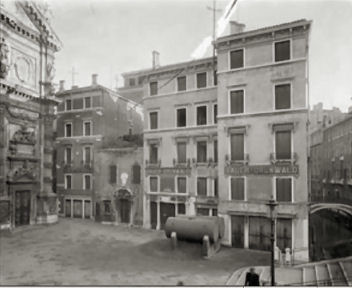
Historical note: this novel mentions that the famous and swanky Hotel Bauer Grünwald (now called the Hotel Bauer) was the Nazi's hotel of choice during WWII and that the Gestapo used it for torturing. I assume that this is an historical fact, but the period is skipped over on the hotel's web-page, funnily enough.

Follow-up note: It is a fact - I've had an e-mail from David Cleveland himself confirming it.


Wilkie Collins
The Haunted Hotel
:
a mystery of modern Venice
One for committed fans of Collins or Venice only methinks. The plot concerns the suspicious death of an English lord who is stolen from under the pre-matrimonial nose of our heroine by a mysterious dark-haired woman (are blonde women never mysterious?) of a certain repute with her 'brother' in tow. They are married and go to live in Venice, where the  aforementioned death follows. The tragic palazzo is then turned into a luxurious hotel conveniently part-financed by the lord's brother. Venice is thus an offstage presence until the family goes forth to inspect their investment half way through the book  and spooky gruesome stuff ensues. The whole sorry business is revealed when the disreputable woman goes bonkers and, of course, writes a play about all that happened. Convenient.

Laurel Corona  The Four Seasons:
a novel of Vivaldi's Venice

This is the third novel in just over a year dealing with the life of Vivaldi. This one begins by telling the story of two orphans left with the Ospedale della Pieta. These sisters rise in the ranks of the famed female musicians there -  Chiaretta as a singer whose looks eventually net her an aristocratic husband and her sister Maddalena as a violinist and favourite of Vivaldi who remains cloistered. The author puts some heat into this latter attachment, on both sides, whilst never quite letting the relationship become a sacking offence. This is suggestive of the composer-priest's much gossiped-of relationship with Anna Giro, but by inventing a new character the author's poetic license can be more fully used. She does this to tell us the story of the two girl's lives, loves and feelings in a way that both feels authentic and keeps us caring. The love and excitement of music are well evoked too. And the book even ends in a way suggestive of a sequel.

James Cowan
A Mapmaker's dream:
The meditations of Fra Mauro, cartographer to the court of Venice
A monk at San Michele di Murano, Fra Mauro is drawing a map of the World. The map is based on the tales told by the many and diverse travellers who come to contribute to his big picture. This is a book of stories and a book of philosophical enquiry. The nature of knowledge and the meaning of maps is discussed, and how both may be more matters of perception than fact. Not a strongly Venetian read to be honest, and a little dry, but interesting in a Sophie's World
and Longitude sorta way.


Arnaud Delalande The Dante Trap
In an almost stupendously lean year so far for fiction set in Venice this one can't fail to stand out and impress, but it would've done this in other years too, I think. OK so it's set in 18th Century Venice and features courtesans, Casanova, political intrigue and masked balls, but our hero's a kind of swashbuckling James Bondish rake, who has to be sprung from jail (leaving his old mate Casanova behind) to solve some gruesome ritualistic murders committed by the Chimera, a shadowy figure who leaves behind quotes from Dante. Our hero is known as The Black Orchid, and was thrown into the cells of the Doge's Palace for loving unwisely. So the author is pleasingly mixing things up a bit, if nothing else. But there is lots else, not the least a fair bit of literary bravado, even if this sometimes tends towards melodrama, and often adds one flourish too many, and the women are
sometimes a bit too too gloatingly gorgeous, it's better than the plain and lifeless alternative. And it gives very good Venice, in historical detail, description, and atmosphere. I'm trying not to use the word gothic but this one does supernatural and spooky very effectively, like this year's Florence fiction highlight The Third Heaven Conspiracy. So if the idea of a  tastefully overwrought and somewhat gothic supernatural murder procedural with added political intriguing floats your gondola give this one a go.


Robert Dessaix Night letters
To say that this book is about a man's travels through Northern Italy after being told he has AIDS is to suggest a grim book about death and fate and regret. But no - our hero may find himself in Venice, writing home about his adventures so far, but Venice's reputation as the capital city of decay and death is here underplayed. What we have instead is people and places and stories written about with a sharpness of observation and language suggestive of revelling in, rather than saying goodbye to, life's joys. Casanova and Patricia Highsmith get looks in. It glows, it shines, it makes you glad to be alive, and want to be in Venice.


Michael Dibdin Dead lagoon
Dibdin's detective Aurelio Zen comes from Venice (the clue's in the surname) but this is the only one of the series that's set there. Here he returns to Venice on some dubious business under cover of looking into the claims of an elderly Contessa that she's being menaced by a pair of spooky attackers. The Contessa, who is now borderline bonkers, used to employ Zen's mother, with the young Zen having the run of her palazzo, dressed as a girl. So his own ghosts and cupboard-skeletons haunt him as his feet find their own away around Venice's streets and over its bridges. His familiarity doesn't breed contempt as far as observation and description go, though, as his walks yield some fine and conjuring images of the city in winter. Faces from his past reappear out of the mist, some more seductive than he remembers and many more shady, but all with secrets to keep or reveal. The plot features a typical cast of corrupt and political ambitious characters, with our hero plotting a course of evasion and confrontation between and around them. Dibdin was the effortless master of this genre and gave it a good name. One of the essential Venice reads.


Sarah Dunant In the Company of the Courtesan
A courtesan and her dwarf keeper are living well in Rome, but are forced to leave and escape the sacking invaders with just the clothes on their back and the jewels in their bellies. They make for Venice, where after a trip to the toilet they can survive, and later they thrive, her friend Aretino follows her to Venice and she gets painted by Titian. (Aretino's famous book of erotic sonnets, with illustrations by Giuliano Romano, features as a plot device too.) Much later the painting hangs in the Uffizi in Florence  and inspires Sarah Dunant to write this book, and it's an enjoyable book - full of life and lust and detail and smells and Venice. The characters, major and minor, live and the locations throb, but the book lacks...something, I don't know what, to take it to that higher level where you'd read it if it wasn't about Venice and sex, but it is, so you will. And then towards the end it becomes something else, as real and confusing romantic love creeps in and make for some touching later pages, and maybe finally gives the book what it needs.


Geoff Dyer Jeff in Venice, Death in Varanasi
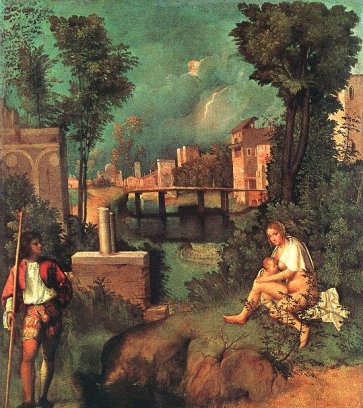
My first reaction to the title was, of course, paranoia. As I started reading the novel my suspicions deepened - our hero is a man living in London, a freelance journalist, no longer young, eating almond croissants from Patisserie Valerie, visiting Venice for the 2003 Biennale, complaining about Giorgione’s Tempest being shifted about in the Accademia, and about travelling all that way and finding that pictures you want to see are away on loan. So far so much identity-theft, as readers of my trip reports will understand. But then he starts having a mid-life male-fantasy multi-orgasmic, multiple-hyphen relationship with a smart woman, drinking himself senseless and snorting coke (even off the mirrors that the Scuola di San Rocco provide for admiring the ceiling paintings!) and so my feelings of close association vanished. The book evokes Venice, and how one approaches and deals with it, well and recognisably. The characters are authentic, the jokes good, and all is smoothly believable. It’s like a Nick Hornby book for grownups. Then in the second half of the book our Jeff travels to Varanasi in India and the book becomes an extended travel article. There’s some interaction with other people, but it smacks of the realness and ordinariness that you get in travel books. Most of the writing is about the place, the poverty, the people, and shit. Lot’s of shit: on the ground, coming out of our Jeff, and hitting him in the face. The word fragrant doesn’t begin to cover it. It’s more Bill Bryson than Bruce Chatwin, unfortunately, and I could discern no real connection with the first half. Maybe it’s me. It’s easy to imagine one has missed something as the Indian section is full of much mystical mumbo-jumbo, some of which maybe one is possibly supposed to take seriously. As I didn’t it's possible that that’s why the point eluded me. ‘Serious’ novels set in a contemporary Venice are uncommon at the moment, which means that this one should be cherished, but not taken too seriously.


Marina Fiorato The Glassblower of Murano
Recently-dumped Nora decides to leave London for Venice and to there become Leonora, reclaiming her colourful Venetian descent, learning the craft of glassblower and discovering more about her famous forefather, himself a master glassblower with a story. The story of Leonora's experiences in modern-day Venice plays out at the same time as we learn of her ancestor's tragic story in 17th Century Venice - and it's been, oh, weeks since we've had one of these past/present shadowing jobs. The historical fiction being set in the 17th Century is unusual - we're more used to a renaissance or 18th Century setting lately - and the glassblowing milieu is quite fresh narrative ground too. Also it makes a change to read a Venice novel this year (2008) that's not about Vivaldi and/or music, although this one does have the Pieta as a strong plot presence. The modern story, though, is very much a wish-fulfilment story for women. Sorry if you think I'm being sexist or compartmentalising, but if I tell you that our heroine gets roped into a glammy advertising campaign for the glassworks she works for because she looks so lovely, like Boticelli's Primavera, and that her colleagues consequently all hate her, and then she becomes pregnant, even though her London relationship had failed because of her barrenness...well, forgive me. Venice is well painted and well loved though, even if there are a couple of annoying mistakes, like Leonora dining out in Piazza San Barnaba - come on, we all know there's only one piazza in Venice.

Ian Fleming Risico
This is a short story found in For your eyes only and it features Venice only very briefly, with a bare few paragraphs, and one good joke. Then it's off to Alberoni on the Lido which gets the benefit of more plot and description and a leftover land-mine accident. If you've only ever seen Bond films, like me, then this is a good place to sample and start and be surprised at how good a writer Fleming is.

Mark Frutkin The Lion of Venice
Marco Polo has had less written about him, fewer novels certainly, than some other sons of Venice we could mention, so we welcome with open pages this well-written fictionalised account of Marco's first journey East. There's an assassin following and a guardian lion who appears in dreams. The hallucinatory nature of many episodes adds some fresh flavour to the writing. As a fan of leaner writing I found this a little overdone at times, but the easy flow of the writing and the plot makes me feel quibblesome for even mentioning this. There are some mighty memorable scenes, odd occurrences and telling resonances too. The Venice content begins and ends the book, with Marco's life-before and the aftermath of the long journey, but the evocation is colourful and authentic, especially at the end, as the returning Marco experiences the full impact and beauty of his home city after being so long away. An uncommonly good  read.

Mickey Friedman Venetian Mask
The story begins in Paris, where a veteran of the '68 riots is still living off the fame generated by a book he wrote about them twenty years previously.  He has now gathered a circle of unattractive 'friends' for his next project. The plan is for the group to attend the Venice carnival, masked and in a costume of their choice, but to not tell each other what these costumes will be, and then attempt to identify each other based just on the appropriateness of their costumes. The protagonists include a couple recently split by the husband falling for a man in the group, so emotions are running high. And then someone is murdered. This is a novel which shows its age a fair bit (it was published in 1987). When I tell you that one of the characters is obsessed with, and attends carnival disguised as, Jean-Paul Sartre you'll get some idea of what I mean. But being of its time is no condemnation, as it's also a novel which holds the interest and keeps you reading and interested in the outcome, although this interest is not generated by caring for the characters it must be said. The writing is effortless and evocative too - the action takes place in a very authentic Venice. It tries to be a serious novel and a  mystery, but falls between stools a bit by being very fractured in its switching between characters and in having so much of the plot-twisting and mystery rely on the cheap trick of mask-wearing. The overall (and unsurprising) theme is identity and the masks we wear.


Cornelia Funke The Thief Lord
This is a children's book, but an unusually absorbing and well-illustrated one.  Ms Funke started out as a children's book illustrator - that's one of her chapter headings below, and you'll find a well-head by her elsewhere on this page.  When a detective working in Venice is asked to track down two missing children he little realises how much trouble this one case will cause for him and his tortoises. The kids are currently living in a disused cinema with a bunch of lovable urchins surviving by stealing and scavenging. Their leader, the Thief Lord, is not who he seems - now how unusual is that in novels set in Venice! - and the big job that's going to make their fortune soon turns strange and dangerous. The underlying theme of the adult vs. the child is well played out, and is even explored in the magical developments later. And magical is, for once, a word that can safely and truthfully be used to describe this book. 
There is also a film.


Robert Girardi Vaporetto 13
Everything has its dark side - life, the moon, the Force and Venice. This book starts unpromisingly, with a cat being put down and with an arid financial fixation usually only found in books with embossed covers. But the shiny heartlessness of our hero's life is, of course, about to get tarnished by contact with the dark and attractive decay and destitution of Venice, and a domino-clad woman who shares these qualities. The author rather overplays the putrescence, in my opinion, and conjures up a somewhat too
dark & corruption-riddled city. This is closer to Stephen King than Barry Unsworth and as such is a fairly gripping read if approached with low expectations.
There was a film of this in production in early 2007, but  it was never finished, it seems.


It's in the National Gallery, but rarely  on display.


Christopher Golden and Tim Lebbon
The Chamber of Ten

The  book begins as a boat brings two characters to Venice and we get some somewhat convenient exposition telling us how Venice is built not on land, but rests on wooden piles, is sinking under the weight of too many tourists, has lost its cats, etc. These characters then visit the Marciana library, where our heroine has discovered an underground chamber full of books, and as she arrives another is found underneath that one! Even though we've just been told that there's no ground beneath Venice for the chambers to be under. Oh well, a certain amount of suspension of disbelief is called for, I suppose, as the story also relies on magic and telepathy, between lovers and over hundreds of years. Once you switch off your scepticism this is a readable romp in equal thrall to Indiana Jones, The Da Vinci Code and The Undrowned Child. And once you've gone all factually forgiving you might also be willing to accept that there's such a thing as a motorised traghetto and that the water in front of the Doge's Palace is a canal, and not a dirty big lagoon. But as the book progresses you'll also have to put up with the just-visited island of San Michele referred to as San Marco, three times; which is both shoddy copy-checking and confusing plot-wise. Then one of the characters has trouble with a motorbike parked in someone's hall. Then a secret room is found with a  Masaccio canvas - that's Masaccio the Florentine famous for his frescoes. (Maybe the authors were thinking of Carpaccio, and didn't have a PC to check. Or to find out the names of any other Venetian artists.) In the end these mistakes and the vagueness of, for example, having an important site described as being 'in Dorsdouro' repeatedly, without ever getting more specific, wearing and annoying. There's also a somewhat inauthentic obsession with all the canals being thick and smelly and the 'streets' being full of rubbish and rats. I mean they're expecting me to buy this book and they can't be bothered with Google Earth, let alone taking a short trip to get to know the place. To say that I don't expect either author to be taking my Venice-lovers Venice Questions quiz is a huge understatement.


William Goldman  (as S. Morgenstern)
The silent gondoliers

A slim volume from the author of The Princess Bride
containing a short fable, much white space, and many illustrations. It's the story of a gondolier with a gooney smile and his struggle for acceptance by his peers - despite having a singing voice that encourages his pelting with old fish - with lots of  secret gondolier lore that is so mysterious and impressive that it must be made up. These include the reason why gondoliers don't sing anymore, despite having such fine voices that Caruso shunned Venice forever after hearing them, and revelations about the secret gondolier hangout and the site of the trickiest turn, used to test all graduating gondoliers. It won't take up much of your life to read this book, but it may well lodge in your memory, especially if you have a fascination for, or indeed a thing about, gondoliers.


Jason Goodwin The Bellini Card
This is the third in a series featuring Yashim the eunuch. Here the young sultan charges our hero with finding and acquiring the famous Gentile Bellini portrait (left) of his grandfather, thought to be still in Venice. He first sends his friend Palewski, the Polish Ambassador, undercover as an American collector. Things soon get murky, though, as art dealers start to get murdered. The particular period in Venice's history - the mid-nineteenth century - with the city's days of greatness fast waning and the decay in no way slowed by Austrian rule - is most authentically conjured up. Mr G knows his Ottoman history and his Byzantine leanings make for a refreshingly Eastern-looking perspective. It's also refreshing to have the action centred around the San Polo/Santa Croce sestieri. This is a mystery more literary than punchy, and a very satisfying and Venetian read.


L.P. Hartley Simonetta Perkins
If I tell you that this one tells of a spunky American heiress travelling through Europe with her Mother avoiding the husbands planned for her you might be reminded of works by Henry James and Edith Wharton, and so you'd be half way to knowing how this was going to go. The author, best known for The Go-Between, puts his heroine into a version of the romance he had with a handsome gondolier, much the same hetero/homo switch as  his near-contemporary E. M. Forster makes in his Italian novels. It's a novel of thoughts rather than actions and so slips by with small bright glimpses of Venice from the gondola and long lingering paragraphs spent in the heroine's head as she worries over her fate and character. But it's witty and believable, despite the rarefied air, and enjoyable. Recently republished by Hesperus Press, publishers of  short lost classics in tasteful editions with interesting introductions by people you've probably heard of.


David Hewson

The lizard's bite

The story here begins with murder in a Murano glass foundry, like the last Donna Leon, but this one is very different - it's harsher and more gruesome in its details, in contrast to Ms Leon's recent lack of any real deaths. Other differences include the fact that Hewson's detectives, Nic Costa and Gianni Peroni, are not the charismatic and eccentric characters here, they are his deputies. (Presumably these names were chosen to subliminally suggest the characters when you buy a coffee or a beer.) Also they're helped by their respective girlfriends, who are ex-FBI and a pathologist, and so do not live in a state of domestic bliss. Nic Costa's ex-FBI girlfriend is introduced in a somewhat leeringly sexy way early on, but she soon confounds our doubts with regard to Hewson's sexism by becoming one of the strongest and more well-defined characters. There's art-crime, corruption, and inter-departmental wrangling as we'd expect, all wrapped in an unexpectedly toothsome plot and some good writing. The other books in this series are set in Rome, but here Venice crumbles and shines as you'd expect with the wrought-iron strangeness of the glass-makers' palazzo HQ adding architectural interest. The somewhat convenient random-violence ending of the plot bugged me a bit, but the subsequent winding up of the various emotional turmoils of the main characters was convincing and impressive. Superior stuff.


Lucifer's shadow
This novel, first published in 2004 and reissued mysteriously in 2009 as The Cemetery of Secrets, almost bursts a gasket fitting in nearly all the themes explored in recent Venice-set fiction. It tells two stories, one set in 1733 and another taking place 250 years later. Both feature Vivaldi, a valuable violin, an English villain, a musical manuscript, the cursed Ca Dario, brutal murders, deception and young love. They are centred on Campo San Cassiano and between them also take in the Ghetto, fatal illness, the Lido and the cemetery of San Michele. So a lot is squeezed in, but it all fits and makes for two strong and very involving tales. Each story alternates chapters but both pull their own so that at no time are you ever tempted to skip ahead a chapter. Each features a naive young man, newly arrived in Venice, learning life-lessons and coming out battered but a wiser person. Each also features central female characters of sass and, if you'll pardon the expression, spunk. Throw in a fair few art references and church visits and you have a mighty good Venetian read.


Katie Hickman  The Pindar Diamond
In a convent on an island out beyond Giudecca lives a girl who once served the Sultan's wife in Constantinople and who mourns an English friend made there. In Venice itself a visiting English merchant seems intent on gambling away several fortunes. His sadness is somehow connected to an English girl lost to a shipwreck, or slavers. The two strands of this story are linked of course, by a diamond and a mermaid baby - we are initially kept in a fog about how. This novel could have been what a librarian would dismiss as an historical romance, but it really wants to be shelved in amongst the real books. In moments of weakness it tends to drift towards the romantic, but generally has the strength to resist. It does this with the help some fetidness, gothic tendencies and sure-footed and swift-moving plotting. Venice sometimes gets a bit vague, geographically, but its never less than a pleasingly rank, threatening and crumbling presence. A much-nonsense enjoyable read.

Patricia Highsmith The rat of Venice
(in The Animal-Lover's Book of Beastly Murder)
A short story about the rats of Venice, and about how one hard-done-by rat exacts his revenge. A nasty tale that doesn't anthropomorphise and so has a ring of truth to life(!) It is nonetheless slight, albeit with a strong smell of Venetian canals to it.

Susan Hill The Man in the Picture
F
or quite a while this small book seems as if it's never going to visit Venice, but it does eventually, twice. It's all about a painting of Venice, a scene of the carnival, which acquires the faces of people whose lives it curses. It's a suitably macabre tale, well told but without much of the descriptive detail one might crave, or the gothic excesses one might dread and love guiltily. It's a very readable mix of Henry James with M.R. James which easily holds the attention, but for me it lacked shocks and texture. 

Mary Hoffman Stravaganza - City of Masks
Having read one novel set in an imaginary Venice (by Tanith Lee below) of course another one appears within mere days. This one's by an author of books for teenagers, which is what this seems to be. I say 'seems to be' because it's more grown-up in its attitudes to sex and death than books I would've read in my teens and, like the works of Philip Pullman, is more emotionally engaging and moving than most books for adults. The fictional Venice here is called Bellezza, gondoliers are mandoliers, silver is more precious than gold (which means the mosaic domes in the Basilica are silver-coloured in Bellezza) and the doge is female. This Duchessa is about to take part in Bellezza's ceremony of the city's marriage to the sea as the book opens. This involves her being lowered into the lagoon until it reaches her, umm, marriage parts.  Into this alterno-Venice is dropped Lucien, a boy from present-day England who is weak and recovering from chemo treatment for cancer. He is transported to 16th Century Belezza if he falls asleep clutching an old notebook made in Venice and found on a skip. His adventures in Belezza take in elements of the thriller and the romance, with a fair amount of magic and alchemy. (William Dethridge, a mysterious Elizabethan mystic  in the Dr Dee mould plays an important part, and talks in an amusynge olde Englishe waye.) Murders are planned, and perpetrated, relationships grow, and the plot whips us thrillerishly to a truly moving conclusion. I loved this book.

There was a sequel called City of Stars,
set in Siena, and a third instalment called City of Flowers which was set in an alternative Florence, which is reviewed over on my Florence page. There are now five Stravaganza books, taking in alternative versions of Ravenna and Padua, with a sixth due in 2012.

See www.stravaganza.co.uk for more info and other stuff to read and play with. 

See The Venice Questions on this very site, for more about, Stravaganza,  Bellezza and Mary H's Venice.


Kazuo Ishiguro Nocturnes
This is a book of five short stories, of which only one is set in Venice. Crooner is the first story, and tells of a young musician's odd encounter with his mother's favourite singer - a Tony Bennettish figure contemplating a comeback. It begins with the musician telling us of the odd life of a guitarist employed as-and-when to play in the café bands of Piazzo San Marco. It gives good Venice, and introduces the themes of the stories: musicians, middle-aged nostalgia, narcissism, and the sorting out of one's life late into it. It has the author's characteristic humanity and sly oddness, all delivered in his easy no-style literary style. But I found the stories artful unresolvedness a bit trying after a while. I don't expect all short stories to end with a twist, of course, but to not have been left hanging every time would've been nice.

Henry James Travelling companions
A young man spots a young woman enraptured in front of Leonardo's Last Supper in Milan. She's an American 'doing' Europe with her father and the three get to talking and meeting up again later in Venice, where things develop. Not a slushy romance, of course, but also not the dense style of later HJ, although there is much ambiguity and subtlety of emotion. It's a bookish young man's story of an early, gentle infatuation. It was written on James's return to America after his first visit to Italy and so the early fierce infatuation with Italy is very evident too. Lot's of love of Leonardo and Tintoretto and Venice as dusk falls. There's period detail in the fact that on a visit to Padua they have to rustle up a boy with a key to see the Giottos - a bit different from booking a time-slot to shuffle in a queue through the climate-controlled airlocks. And Veronese's not quite so fashionable now. A good and accessible intro to Henry James and his Italy. And a fine companion to the later and more well-known...
The Aspern papers
The story of an obsessed biographer's siege laid to an old woman and her elderly niece in the hope of getting his hands on the old woman's papers, she having once been the muse of the fictional famous poet Jeffrey Aspern. The women live like hermits in their gloomy and unloved Venetian palazzo and so the biographer becomes their lodger and worms his way into their Miss Haversham-like dusty seclusion. The story is based on a true one, although the city was Florence and the poet was Byron. The writing style is more mature and more mannered, and matches the pompous obsession of the narrator. The Venice evoked is a fair bit darker too, with most excursions made at night, and in gondolas with the felze cabin on, but no less seductive. A classic of the fictional Venice.


Joseph Kanon Alibi
I’ll admit to never having heard of this author before but, what can I say but ‘my mistake’.  It’s 1946 and Adam Miller leaves the army and his job tracking down Nazis and goes to stay with his mother newly relocated to Venice. His mother has met someone she wants to marry, it seems, and then Adam meets a Jewish woman at a party who tells a story that makes him violently unwilling to let the marriage go ahead. Venice sparkles as ever, and everyone has their dark secrets and much is not, as you might imagine, what it seems. The period is a fertile setting for those old Venetian themes of death and deception but this novel has ambitions beyond murder-mystery plot twisting and it achieves them, with satisfying amounts of moral ambiguity and believably conflicted characters. The quality of the writing grips you from the off, and Venice is integral and lovingly conjured. The blurb mentions the ‘piazzas and canals of Venice’ even though, as most of us know, there’s only one piazza in Venice. But that’s just the blurb – more puzzling is the novel’s recurrent use of a location near the Accademia called San Ivo, when it seems to mean San Vio. But I pick nits, and this is one of the best Venetian reads you could hope for – because it’s much more than just a book that happens to be set in Venice: it’s about Venice at a particular point in its history, and how lives were being lost and ruined in ways both particular to the time and horribly familiar and universal.


Jane Langton The thief of Venice
In which Homer's wife Mary takes centre stage, as she wanders Venice, photographing every corner, and comes under the spell of a handsome murderer, whilst Homer fondles rare books. Another plot strand involving one of Homer's colleagues gets woven in, all towards a satisfyingly exciting denouement. This is still cosy stuff, to be sure, but acquires some quite stirring emotion as Mary confesses to her lapse, and later when some tragic history emerges. But both of the Homer Kelly mysteries I've read (the other is set in Florence) have had our supposed hero sidelined by other characters. Is this what I get for coming to a series late? Shame about the standard of proofreading too - we get the composer Haydn referred to as Hayden, twice! And I can’t believe that someone scientifically testing Venice’s irreplaceable holy relics would be allowed to take them home. Good Venetian atmosphere, though, and the problems of getting around during the acqua alta are well evoked and worked into the plot.


Tanith Lee Faces under water
This is the first of a series of books set in a fictional city based not-loosely on Venice. The city is called Venus, it's full of canals; it has gondoliers, but they are called wanderliers; and it has a carnival where all must go masked, on pain of death. Making it not the real city means Ms Lee can take liberties - not least with geography and place names - whilst retaining the spirit of the place. And retain it she does, and turns it up a few notches into darker territory and deeds, darker even than are usual for  Venetian Gothic fictions. It means that she can also create another island, lost under the sea, with sea-weed draped statues and fish-infested palazzos. The plot plays with not-unusual Venetian themes of deception and masks and magic and death. But it's all cranked up a few notches, as I say, and nasty and sexy. Some good vivid writing, too, if you can forgive occasional bursts of the incomprehensible and the overwrought, which I can when there's as many bits of glowing and sensual writing as you get here. Horrible cover though.


Donna Leon


Death in a strange country
2
This was only the second of Donna Leon's Venetian murder mysteries, featuring Commissario Guido Brunetti, but it shows all the elements and excellence of the later episodes, pleasing on so many levels. There's the plot, involving a dead American found floating face-down in a canal, loathable industrialists, and official obstruction and corruption making the Commissario's job much harder. We get nearer to a fuller understanding of the hidden power of money and then the Mafia things get genuinely scary. And then there's Ms Leon's fab way with family life, and Guido's believable relationship with his fully-rounded wife and kids. Policemen just don't come more straightforwardly likeable and admirable than Guido Brunetti.

The death of faith 6
The iniquities of the Catholic church are explored and exposed, as a visit from a nun who cared for his sick mother puts Commissario Brunetti on the trail of many an unworthy cleric and pious hypocrite. Real people populate Donna Leon's novels and Brunetti and his familiar family and colleagues are here forced to face up to Italy's mother church and its many failings: priestly proclivities, greed, and Opus Dei amongst others. She just gets better with each one - the bizarre image of the very small man living in a flat full of very large furniture and his collection of very small (snuff) boxes cannot fail but lodge in your mind.

A noble radiance 7
The discovery of bones in a field at the foot of the Dolomites starts the Commissario poking his procedural stick into the wasps nest that is the Venetian aristocracy.  And, as he opens up an old kidnapping case - that most anti-family of crimes -  our hero delves again into matters familial whilst plagued by his aristocratic father-in-law's accusations regarding the state of his own marriage.  The incompetent superior and his oily familiar are familiar figures, as is the smart and connected secretary Signorina Elettra. Venice, too, is strongly in place, if never quite fragrantly evoked. Then, towards the end, all sorts of odd stuff emerges and the meaning of the  title is clarified. You can rely on Donna.

Fatal remedies 8
Brunetti's wife Paola is getting increasingly angry at the reports of sex tours taking men off to places like Thailand to have sex with children. She decides that action is called for, and that an implicated local travel agent needs his window breaking. After the second such attack Brunetti can't prevent her arrest. As the couple argue over right and wrong, and where the law stands with regard to these concepts, Brunetti's current case takes a tragic turn. This is what we want: sexual politics, discussion of what makes a marriage strong, typical Italian corruption, the typically bad postal service, and all played out against our favourite backdrop, evoked in a low-key, but strongly. Paola is undoubtedly a strong woman: she has her own career and does what she thinks needs to be done, yet strangely she still finds time to cook and wait on Brunetti hand and foot, while he lies around and reads. Now why can't I find a woman like that?


Friends in high places
9
Drugs and building regulations figure largely in this one. Brunetti's apartment is found to not officially exist and then the bureaucrat who'd told him of this dies suspiciously, as do some drug addicts. The whole mess is stewed up by the presence of some loathsome loan-sharks, and the descendents of doges, and we're set for more insights into the unchallengeable  corruption of the Italian state, set against the backdrop of the city we love, featuring characters we care about. 

A sea of troubles 10
A fishing boat explodes and sinks out on Pallestrina and two clam fisherman are found dead in the sunken hulk. So begins a case for Brunetti which combines  the familiar themes of corruption, bureaucratic blind-eyes,  and obstructive witness  with new concerns like the confusing strength of his concern for the welfare of Signorina Elettra, the Questore's secretary, who insists on going undercover to help. Although she uses the same characters in each of her novels Ms Leon never exactly covers the same ground, with the allegiances and prejudices of a small fishing community providing the flavour here, and Brunetti is as prone to confusion at his emotions as the rest of us.  And all rounded off with a tragic and truly gripping climax.  
There's a video interview with Donna Leon about Pallestrina and this book and about how crime-free Venice actually is here

Wilful behaviour 11
The murder of one of Paola's students sends Brunetti chasing leads all the way back to World War II, as long-forgotten, or long denied, episodes in Italy's fascist past are dug up, often by people who haven't forgotten, but who still deny. Fascinating insights into country-wide amnesia, and the lack of any reliable histories of the last World War in Italian, mix it up with a fashionable foray into art-crime in another reliable gripper. And all the stuff I usually say about the truthful and touching family and human stuff is here as usual, if not more so.
Uniform justice 12
The uniform being military and the justice being about as elusive as usual. A cadet is found hanged in the showers at an elite military academy and suicide is the easy answer. You will not be surprised to learn that Brunetti is sceptical, and rightly so. The boy turns out to be the son of a Venetian politician known for his honesty - that rarest of qualities in politics generally, let alone Italian politics - who had retired suddenly many years previously. This retirement had coincided with his wife's getting injured in a hunting accident, and resulted in an investigation into military procurement shenanigans being dropped. You can see generally where this is going, but it is the emotions and issues stirred up in Brunetti and the other cast members that provide the meat in the tale. Signorina Elettra is again essential, and seems about to reveal some back-story, but remains as enigmatic as ever. The usual blend of cynicism and humanity make Brunetti as lovable as ever, and we continue to care and want to know what'll happen to him next.

Doctored evidence 13
As twisty as ever the story, beginning with the death of a grumpy old woman and taking in the oppression of immigrant workers, blackmail and a comprehensive selection of the old seven deadlies, is at once familiar and surprising and full of very real people.  I found a couple of the plot devices a little laboured but this is as convincing and involving as ever. And Signorina Elettra just keeps getting more and more of an enigma.

Blood from a stone 14
As the Christmas lights sparkle in bitterly cold mid-December Venice an African seller of fake designer bags is murdered. And so Brunetti begins an investigation that'll reveal racism, uncover conspiracy and show us more of the Italian state's labyrinthine levels of corruption. But Ms L. keeps the blend as fresh as ever with Brunetti's family life reflecting the issues and that easy style breezing you through the very present-day  concerns with wit and perception. Another good one.
An early title for this one was Vu cumprà, the faintly derogatory name for the African bag sellers, but a bit out of keeping with the usual cliché-based titling of this series, I suppose.


Through a glass darkly 15
This one begins during a peaceful Spring stretch for Brunetti as, for the first hundred pages, he gets to investigate a crime that's not been committed, only threatened, but which has worried the daughter of the owner of a Murano glass works. Her father has been heard to say he'd like to kill his son-in-law, her husband, whose eco-concerns are  somewhat contrary to the old man's business ethic. So there's much discussion of the harm being done to Venice's waters and workers, and some nice glassy stuff. Eventually someone's found dead by a furnace

Suffer the little children 16
And this new one's even more murder-free, as our favourite Commissario looks into a carabinieri raid on a paediatrician which results in concussion and a baby taken into care. He uncovers baby-trafficking, misuse of computerised records and some men with some very nasty views. But even with such un-gruesome material we're still drawn in and gripped by the effortlessly human beings Donna Leon puts our way, including old favourites like Signorina Ellettra, who gets to play an even more crucial, and active, role this time. This all feeds into the series' recurring theme of the family; with Venice, food, morality and corruption all pondered too. And fig flavour ice cream.


The girl of his dreams
17
This one starts out all low-key and domestic again, with no real crime committed for the first third of the book. But we do eventually get the real thing this time, with the shock of authentic death by drowning. The non-crime bit concerns itself with organised religion, with the topics of East European immigration and gypsies all stirred up by political correctness and corruption as the book progresses, making for a good topical and typical brew. As ever it's Brunetti's way with people, his way with conflict and politeness, his humanity and perception which provides the meat and keeps us turning those pages.  All our favourite characters are here, and there's that comforting feeling of catching up with the lives and gossip of acquaintances. New developments include a map showing the places where the action takes place, and Brunetti admiring, and visiting, a fair few churches. As my tribute to the use of clichés for the recent titles I have to say: she makes it all look so easy.

About face 18
The Brunettis go to a dinner party at Paola's parent's palazzo. Rich people are there, discussing rich-people stuff, but a rich man's wife with an unearthly look, thanks to plastic surgery, surprises and arouses Brunetti with talk of Cicero. Next day at the office Brunetti is introduced to an initially cagey Carabinieri who needs his help, but only reveals why only after three chapters of emotional and verbal sparring. And so we're off. There's soon a corpse, the Camorra, useful computer hacking and trips to a casino and chemical dumps in Marghera. This one's basically about the illegal shipping of waste, but the personal and political webs that are woven around the plot and the people is what we turn these pages for and we are, as ever, not disappointed. I have to say, though, that I was more than  a bit unconvinced by a crucial aspect of the (plot-crucial) behaviour of the main character in the non-waste-related strand of the plot, revealed towards the end.  Another one set in the snow too, as was Edward Sklepowich's Veils of Venice a couple of weeks back.
A Question of Belief 19
There's a hot summer setting this time, as Brunetti wades through the sticky days up to his holiday poking around a couple of unrelated and barely proven crimes. It's real life stuff of course, with the usual concentration on personalities over procedures. An old woman seems to be being taken in by a dubious faith healer - not so utterly different from being duped by the more solidly entrenched state religion, as Brunetti observes. And there's something wrong with a number of court case deferments that could well be profiting the defendants. No crime is committed or detected until almost halfway in, when a body is found as Brunetti's holiday has barely begun. The story is littered with sadly wasted lives, dealt with with Ms Leon's trademark combination of human warmth and practical cynicism. And as ever you're left with the feeling of having delved into real lives.


Toni Sepeda Brunetti's Venice
This is a handy-looking little book, nicely presented and with good maps. It takes the form of twelve walks through Brunetti's life as presented by the novels, with much use made of lengthy quotes, which points up Donna Leon's obvious sanction of the project. Toni Sepeda, who gives Brunetti tours, obviously knows her stuff and needs us to know it. After a while the waffley and self-important tone began to grate on me, I must admit. I'd suggest the book's use to help find locations rather than as a cover-to-cover read or as a guide to take on your travels. The novels are anyway rare in their avoidance of location invention and other such liberty-taking.
 

Michelle Lovric
Author interview and answers to The Venice Questions


Carnevale 
The young daughter of a Venetian merchant is taking a bath, drinking  fragolino and eating chocolate cake, when a cat appears and, to the sound of a lone violin, lures her into the gondola and arms of Casanova. The girl, called Cecilia, blossoms under Casanova's tutelage into a seeker of pleasure and a painter of portraits which bring out the sitters' inner sensuality, or at least the fact that they've just had a shag. The first half of this book is The Life of Casanova told again, and told in a bit of a rambling fashion, it has to be said. It holds your attention, just, and is unquestionably well written with evocative bits of Venetian business. It just needed a bit of pruning, I think.  Casanova here is the Casanova who loves women, not the one who loves them and leaves them. Cecilia is his last true love - the love of his decline who came too late to be included in his memoirs.  In the second half of the book she meets and becomes smitten with Lord Byron - a man whose love of women takes a different form. We're talking large contrast here, as Byron uses Cecilia and leaves. She spends the rest of her life, and many many pages, pining for this man who treated her worst...then he turns up in Venice to treat her badly some more. (He brings with him the tales and friends dealt with in Federico Andahazi's The merciful women.) Carnevale gives good Venice but it could have done with some editing. It is long and mite long-winded; but I couldn't stop reading it, and in the end I finished it feeling that I'd really read something.


The remedy
And this one's even better, and leaner and just as flavoursome! The action switches between Venice, where a daughter of the aristocratic Venier family is confined to a convent, very much against her will, and London where later Valentine Greatrakes' quack-remedy and 'importing' business is stuck a blow as his partner is killed in Venice. There will be more murders, lies, romance, sex and travel before the plot to this one plays itself out. There's also much vivid description of the streets and low life of the Thames Bankside and dank Venetian canal sides - The Remedy gives good 18th Century Venice and London, with descriptions you can almost taste, and not just of the food. The hint of decadence in the writing and nastiness in the plotting I find much to my taste too. And if you want to know how you can use any peacock dung, faeculae of cuckow  and ox galls you might have about the place in remedies and other useful potions this book will tell you too, with handy recipes at the start of each chapter. None of them tell you how to cure 'putrefaction of the tripes', however, so I'll have to keep on looking.


The Floating Book
And the one which was published between the two above is the one that I've read last. It tells a tale spun around the arrival of the first printers from Germany in 15th Century Venice, and the controversy they caused making books more widely available, and daring to print the arousing poems of Catullus. This narrative framework of printers, scribes and writers, though, is supported by the women in the story, basically a wife, a prostitute and a nun. And refreshingly it's not the woman of God or the woman of pleasure who one admires most. This is all perfect grist to Ms L's sensuous mill, if you'll pardon the expression, and she goes excellently to town with the poetry, the printing, and the passions. It's a story of love misdirected and love spoilt for lovers of books and Venice. There's witchcraft too, to add spice, some effective use of bird (and egg) imagery and a very believably blighterish cat. The life of Catullus himself features as an introduction to each of the seven parts of the book and Giovanni Bellini, one of my Venetian heroes, makes an appearance too, but not in a showy-offy way. Not a short book but so full of Venice, atmosphere, feeling and characters to care about that it's soon over and leaving you breathless and sated. And wondering about owls.

The Book of Human Skin
Five years after The remedy comes the author's new novel for adults. This time she steps out of her Venice/London comfort zones and sets the action half in Venice and half in Peru, in the late 18th Century. The story tells of a Venetian merchant's family, where the father's frequent trips to Arequipa leaves behind a son whose behaviour goes beyond evil and a daughter whose goodness is surprisingly strong enough to cope. Things getting much worse is what the novel is all about, so I'll not give much more away. But as the plot develops the Santa Catalina convent in Arequipa (see photo right, by Graham Morrison) is a considerable centre of the action - the cloistered life being a not unusual theme in the author's works. The story is told by the main characters, in their own voices, and even in different fonts. Ms L's ability to well, be these different characters borders on the spooky - this is writing to relish and, I'd hazard, a good big notch up from her previous work in power and range. You'll need a pretty unsqueamish taste for fleshy concerns and visceral detail too, as physical afflictions and infections are dealt with in unflinching detail. The life of a person being written on their skin is a major theme here - the clue's there in the title. Venetian detail takes a back seat to the narrative sweep this time, but the city is still an essential element, with no other place possible for the plot's purposes. Fans of Michelle Lovric's previous work will revel in the reappearance of Cecilia Cornaro, the heroine of Carnevale, as a very central character. This novel will worm its way into your brain, get under your skin, and if your heart isn't faint it's in for more than a fair amount of activity too.


The Teo and Renzo series

1.The Undrowned Child
This was the author's first book for older children and concerns the visit to Venice of Teodora Stampara, a bookish and solitary child who is the the daughter of scientists brought to the city by a conference on Venice's danger of drowning. Teo is let loose on the city of her dreams and is soon in possession of a book about the city which seems made for her, in more ways than one, and which leads her into some very dark and dangerous places. Along the way she makes friends, mostly with women with fishy tails and dirty mouths and a taste for curry, but also with ghosts and statues and a Venetian boy. Along the way she learns much, about Venice's history and her own. This is as spooky as you'd expect from a supernatural tale for young adults/older children, but with charm and humour too. If I'd read this book as a child I think that my passion for Venice would've grown that much quicker. Citing the names of Potter and Pullman is not inappropriate, but not as a marketing ploy so much as an appreciation of the rare skill for combining magic and humanity so that the reader is left with his collies wobbled and his heart warmed.


2.The Mourning Emporium


Review coming soon.


Mary Lutyens Meeting in Venice
Most of us are lucky to have one spectacular life-defining person or event in our lives, but Mary Lutyens... Well, first of all she's the daughter of Edwin, the great architect of the Raj, and then her mother Lady Emily, the daughter of the Viceroy of India, becomes a big noise in the Theosophy movement, which eventually leads to Mary becoming the prolific biographer of Krishnamurti, the mystical movement's messiah. Later she met and married J.G. Links, ex royal furrier and the author of one of the definitive guides to Venice, as well as one of the foremost Canaletto scholars. She also edited John Ruskin's wife Effie's letters and wrote a biography of her father. And she was a novelist. Meeting in Venice introduces us to Catherine, a woman married to a bland and status-obsessed bore and living in Mayfair. Once a year she visits Venice for two passionate and blissful weeks with her lover. The first third of the book is is preparation, explanation and travel, and then we get to Venice. The book was published in 1956, and there's much fragrant post-war detail  (bomb-damage, rebuilding, liver sausage) in the London section. The Venice details are less dated, although the lover being called Roderick is not something you'd get nowadays. Venice as a place of blissful romance has rarely been more glowingly evoked, though, even if our Catherine seems to spend a lot of time in agonies of doubt and guilt. This is a book about the fatal ambiguities and anguish of adultery, and the dangers of forcing choosing. It's a good old-fashioned serious novel which I heartily recommend.

Kay MacCauley
The Man Who Was Loved

These things come in waves, I suppose. There was a time when Venice-set novels were all about death or Renaissance art, and just recently nuns and prostitutes have been popular. This one shares some of the  apothecary concerns of The Remedy above but otherwise ploughs its own mysterious furrow, being concerned with a boy whose face makes people oddly happy and reminds them intensely of loves lost. He is taken from the foundling hospital of San Barnabo in 1546 by a nun and as his luck decays and brightens he becomes a beggar, a Contessa's plaything and a beggar again, and makes many friends and enemies along the way. These include a collector of corpses who cannot die, a would-be sorcerer who is decaying with the pox, and a castrato whose ups-and-downs rival our hero's. Venice is all around, as you might say, as our boy lives and lurks in various corners, mostly around the Rialto Bridge, but it's left to our experience to provide the pictures as there's not much description of these places. Not that there aren't very sense-arousing descriptions of people and smells and rooms and activities, because there are - very. This verges nicely on the gothic, in its otherness and physicality, and won't soon leave your imagination.

Ian McEwan The comfort of strangers

Boring Brit couple (imagine Natasha Richardson and Rupert Everett) fall into the clutches of a predatory Italian Christopher Walken type in an unnamed but self-consciously evoked Venice. So many years have passed since I read it that I won't say more until I've re-read.

Paul Magrs
Doctor Who - The Stones of Venice
This is an 'audio drama' - it comes in four parts on two CDs and it can't be bought as a book, as far as I know. The Doctor is played by Paul McGann, the one who resurrected the dying franchise a fraction before 2005's big rebirth, with India Fisher as Charley Pollard. The story has the duo heading off in the Tardis for a weekend break in Venice, but turning up far into the future just as the city is about to sink in a cataclysm brought about by the curse of the Duke's murdered wife, who the Doctor's assistant is forced (by a web-footed gondolier) to impersonate ... Well, all is murky and crumbling and decadent in this more-than-slightly Gothic view of Venice, which is not unprecedented, but which is done well, with much dialogue, of course, and some of it quite clever. The intelligent chat quite makes up for a somewhat thin plot, in fact. The four parts all end with authentic cliff-hangers, and there's much dry humour. The actors all speak un-accented English, which is OK, but the church bells which ring in the background of outdoor scenes are plainly English church bells, which is far from OK, especially given the BBC's famously comprehensive library of sound effects.


Lauro Martines  
Loredana: a Venetian tale
The clever conceit of a sixteenth-century Venice with two layers - the under layer being where the poor live, of course - attracted me to this novel. I was also impressed that it was by the historian responsible for the recent book about the Pazzi conspiracy against the Medici. It's also interestingly c0mposed of  the letters and confessions of the protagonists, with second-hand reports interspersed. But the story, of the forbidden love of a woman and a priest against a backdrop of political revolt, took so long to get going I gave up a third of the way in. And if I have to read another book set in the Renaissance where the female protagonist's husband prefers the company of other men... I was, in short, ungripped.

Sophie Masson The Madman of Venice
Having had some mighty fine experiences with such works by Phillip Pullman, Cornelia Funke, Michelle Lovric and Mary Hoffman my expectations of works meant for 'young adults' are not low. But being aimed at this market can also result in works with somewhat less ambitious intentions, it seems. It's not that I didn't enjoy this tale of pirates, kidnapping, love and learning set in Venice in the 17th Century, it's just that it didn't have that extra adult-grabbing quality that the best of this kind of stuff has. Venice is a backdrop here that is picturesque, but lacks detail and doesn't breathe, and the story twists and holds you, but didn't move me. There's more overt  romance, of the slushy boy/girl kind, than I'm used to too, but then again I'm not the target audience.

Lisa Jean Murphy
The Red Priest of Venice (play)

Another contribution to the range of theories explaining Antionio Vivaldi's relationship with Anna Giro and Paolina Trevisana, this is a play performed in San Francisco in July 2007. It's both a convincing theory and an entertaining piece of drama. The bare bones of the play's take on their relationship is that Paolina first meets Vivaldi when she becomes his secretary whilst he's working for the Prince in Mantua, develops an attachment, and eventually agrees to return with him, with her little sister Anna, to Venice. These bones are fleshed out believably and with dramatic conviction, and without any of the preciousness, anachronisms or name-dropping that one dreads with this kind of story. The explanation of the relationship is less startling then the one put forward by the novel Hidden harmonies, but the frisson here when Vivaldi first kisses Paolina is still strong, and well handled. The play is admirably well written and well acted, and you can watch it on youtube here. The actors all have day jobs and the budget is small, but allowances only really need to be made for a couple of intrusive accents, and you soon forget this limitation too. There's quite a bit of humour too, and it's nicely done. I especially liked the composer humming and scribbling and then saying exasperatedly to himself  'I've written this before!' Very well worth watching.
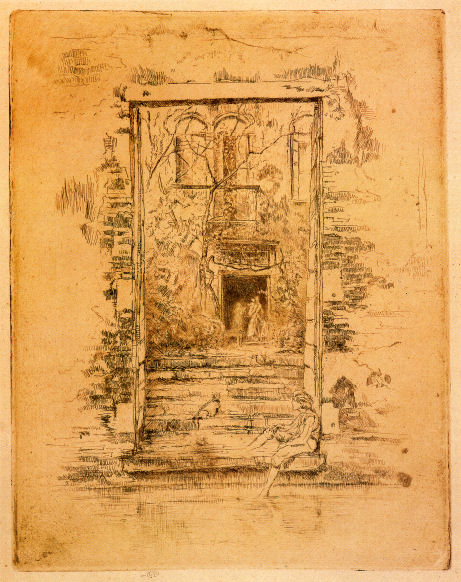
Beverle Graves Myers
Interrupted aria
Tito is a talented castrato who returns from his training in Naples to his native Venice and a place in one of the city's many opera companies. Both his family and the company seem plagued by intrigue  and undercurrents and soon connections and old wounds are revealed. And then someone is murdered. This is a slow-building mystery that soon gathers pace with maybe too many plot-twists and revelations. It's a satisfying and gripping read, though, which paints a convincing 18th Century Venice, with a certain brutality and a believable diversity of sexual preferences. Having said that the range of proclivities doesn't result in any passages devoted to activities one might deem naughty. The lot of the castrato, and the attitudes and prejudices they had to endure, is another fresh theme and adds meat to this flavoursome read.


Donna Jo Napoli Daughter of Venice
Donata is one of the daughters of one of Venice's richest families so she wants for nothing. Except knowledge. The torment of a girl with an enquiring mind who isn't expected to need an education, and who isn't even allowed to explore the city she loves, is convincingly evoked.  She takes to the streets dressed as a boy and her horizons broaden swiftly. The street life of 16th Century Venice is new to her, and fascinatingly daunting. We learn as she does, and if sometimes this knowledge seems a little false in the convenience of its telling, it's always interesting, to her and us. That noble families in renaissance Venice could only afford for one daughter to marry, and that her sisters would be condemned to maiden-aunthood or a convent, is a sadly convincing piece of knowledge. That only one son was also allowed to marry, so as not to confuse the line of descent, is more surprising. Donata's story is emotionally involving too, as she takes her destiny in hand, and falls in love with a man who thinks that she's a boy. That her adventures take her first to the Ghetto is not unusual in recent Venice-set fiction, but she learns and feels fresh things here too. And, like the best novels set in Venice published in 2002/3, this was written for older children - see also Stravaganza and The Thief Lord.


Elle Newmark
The Book of Unholy Mischief
Luciano is a street urchin living in Venice at the end of the 15th Century. Having been raised in a brothel and on the streets, his life changes when he's taken back to the Doge's Palace by a chef in need of an assistant. His skulking abilities lead to his witnessing the Doge poisoning a malodorous peasant who he'd mysteriously invited to dinner, and more murders follow. It's all somehow linked with a mysterious book that everyone wants and the chef has his secrets too, it seems. This is another of those books where the action takes place in a Venice whose locations are barely named and rarely described. Liberties are taken with places and names, but the flavours and smells are strong and satisfying. The author plays fast-and-loose with history too, but still pulls the whole thing off. It's a young boy's story, but it's not a book for children, or even 'young adults', because it's less of an adventure and more a book about our desires, in the broad sense, and how they are sometimes misguided. But before I get too lit-crit, I should also point out that the action involves lots of food and cooking, and quite a few cats. An enjoyable, sensual and well-written first novel, then, with only the liberties taken with Venetian topography and history to quibble about.


Ashkin Ozcan  The Second Venice
I found this on Amazon and bought it because the central conceit was appealing - Venice has got so crowded that two American multinationals decide to build a second, bigger, Venice on the mainland. But having an idea and turning it into a readable novel are, as this book proves, two very different things. The writing is plain bad, the narrative structure non-existent, and there are weird recurring obsessions on view - AIDS, national characteristics (especially concentrated on Swedish women) and Arabs. But a frown-inducing quote will paint a thousand words, as it were...
Swedish girls were not getting their share of Italian men at all, as no Italian man was showing interest in them, especially at a time when AIDS was spreading. Many Italian men having married earlier with Swedish girls and having divorced after some years, had spread enough news around, and those ice-cube-looking Swedish blondes who hoped to get an Italian man for a night or two, were returning home, empty handed, at night.


Pier Maria Pasinetti  Venetian Red
I am annoyingly unable to remember what made me search the second-hand book sites for this one. The delivery took many weeks and my mind...well, you know. Anyway, it was sure a wise decision as this is an unusual one - a novel set just before the Second World War featuring a cast of Venetian patricians and artists and their children. Most of them are eccentric to the verge of madness and can't help but fascinate. The novel is also unusually well written, with Evelyn Waugh and Iris Murdoch as comparisons which sprang to my mind. Published in 1957, it's old fashioned, in its reliance on long chapters of conversation, often revolving around the characters' states of mind, but it's all good and witty. The plot centres on the search by a couple of the younger members of the Partibon for facts about their uncle, a man whose name only has to be mentioned for faces to blush, conversations to stop, and anger to be expressed. I'll admit to a crisis of commitment about 100 pages into this long book, but persevering rewarded me and I became as keen as the characters to find out just what the hated cupboard skeleton did. A later move to Berlin provides a nearer and grimmer perspective on historical developments. P.M. Pasinetti was born in Venice and died there in 2006.  He split his life between Venice and teaching in US universities and was also involved in various film projects, being distantly related to Antonioni and his brother being a famous Italian film director who gave his name to one of the prizes at the Venice Film Festival. His other Venice-set novel is called From the Academy Bridge and was published in 1968.
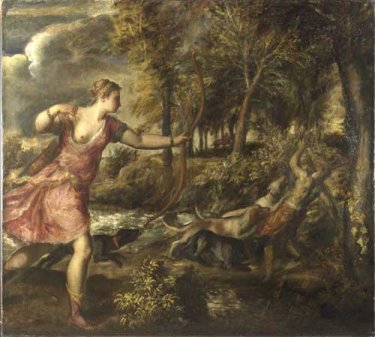


Iain Pears The Titian Committee
He wrote the excellent An Instance of the Fingerpost, and he's also the author of five novels of  the art-crime adventures of art dealer Jonathan Argyll and Flavia di Stefano of Rome's Art Theft Squad. (The series begins with The Raphael Affair
)  Their quirky hot/cold relationship is par for the course, but the wit and quality of the writing isn't. Here they investigate instances of cash-for-attributions and messy murder amongst the members of a group of art historians gathered to study the works of Titian. The crimes echo the art in a pleasing way, rather than just using paintings as a tasteful back drop. Venice, and its canals' risings and flowings, is much more than just a pretty setting here too. 


Juan Manuel de Prada The Tempest 
A naive young Spanish art historian arrives in Venice to study Giorgione's 'The Tempest', a painting which has obsessed him for years, and about which he has written a long thesis explaining its many mysteries. But his arrival in a damp, misty, wintry Venice is marked by a murder, and he soon becomes embroiled in a plot involving forgery, theft, murder and marriage.  Our hero is an annoyingly pompous and sexist prig, whose experiences serve, of course, to shake his intellectual prejudices and teach him to feel a little more, and to suffer. The book is admittedly a page-turner for its evocation of damp and misty canals and its satisfyingly twisty plot, but the suspicion remains that it may not just be the hero who is revealing his pomposity and un-PC attitudes, and the author does look more than a little self-obsessed in his back-cover photograph.

This was filmed in 2004, but it didn't make it to UK screens (or DVD boxes).  A DVD is available in Germany.


Barbara Quick Vivaldi’s Virgins
This is the tale told by violinist Anna Maria of her early life at the Ospedale della Pietà and of the training that leads to her becoming one of the most accomplished musicians from the famous orphanage. Vivaldi's links to the Pietà, and his writing of music especially to test and stretch the performers, has become part of the mythology of the place and the composer. The author here takes this story, and the fresh research into the women of the pieta by Mickey White, and fleshes it out into a novel that stays true to the facts, but also adds a bit of spicy conjecture and imagination. The writing is sharp and spicy too, and the Venetian detailing and atmosphere are faultless. The story is a bit usual in its dealing with a girl's coming of age in a cloistered environment, and discovering who your friends are. But she is also discovering who her mother is, and discovering Venice in infrequently taken, and frequently punished-for, trips to palazzos and the ghetto and the like. Vivaldi is convincingly painted, and we get to meet Scarlatti, Handel, and Tiepolo too. The characters, famous and not, live and breath effortlessly, though, and the reader is never less than enthralled and convinced.
The
author's website has some fascinating background material.
The image to the right is the symbol branded onto girls left at the Pieta.

Christi Phillips The Rossetti letter 
Here the tale of a courtesan involved in the Spanish Conspiracy of 1618 is alternated with the story of a just-dumped postgrad student who is writing her dissertation on said courtesan and conspiracy, and who has come to Venice to attend a conference and meet the person who is rumoured to be writing a thunder-stealing book on the same subject. The conspiracy may well have been a figment of the council of ten's (or their informant's) imagination and there are many conspiracy theories about it. It is also the subject of Thomas Otway's play Venice Preserv'd. The 17th Century story here is well told and the period detail and atmosphere is most impressive and sensual. No problems there. And even the modern story is well-written and full of likeable and convincing characters. It's just that it reads too much like a slushy romantic novel at times, for this romance-a-phobic chap anyway. There's just a little too much about getting the right frock and shoes, and all that does he/doesn't he stuff for me.  But having said that the simple conclusions of romantic fiction are not resorted to and the relationships are not unreal. I recommend this for you soppy girlies out there, then, but advise chaps to be prepared to get in touch with their feminine side.


Thomas Quinn
The Lion of St Mark
Book One of The Venetians

I was initially worried that I wouldn't like this one as it looked very maritime and martial - much as I love Venice I'm not much into sea stories or war stories. But I needn't have worried. This story of the Siege of Constantinople and its aftermath for a pair of patrician families in conflict has all the narrative drive of an adventure story, with characters you'll care about, and description and detail to conjure up the places and the era with an efficiency bordering on the sensual. It's a cliché to say it's like being there, but here it's true, even when it's places you'd rather not be, like dank and rancid cells and the thick of battle. The comparisons with more recent conflicts involving a western power and Islamic states can be made, but should not be laboured, and they're not in the book itself. This is a painless and pleasurable way of familiarising yourself with some grim and important episodes in Venice's history whilst immersing yourself in some fine prose and a ripping yarn. 

The Sword of Venice
Book Two of The Venetians
And this one carries on the tale (two decades later) of Venice's history and battles, with the Turks and others closer to home, again seen through the eyes of the Ziani family, and featuring their continuing  feud with the Soranzos. Antonio Ziani and wise little Seraglio are back, but the focus here is more on Antonio's son Constantine, and the brunt of the brutal feud passes to him too. There are more land battles this time, but a big nautical engagement ends the book spectacularly. As in Book One years of history, political manoeuvring and battles are made winningly digestible by being humanised and paced expertly, so emotions never take second place to dry facts. If I was a nit-picker I'd mention the odd surprise of a disappointingly clichéd turn of phrase, but these are very few and soon forgotten as the pacey plotting keeps you happily turning pages to the end. Roll on Book Three.


James Ringo Uncle Theodor
Well here's an odd one. It's a slim novel from a man who is described in his blurb somewhat grandly as 'one of the last true Renaissance men of our times'. What this seems to mean is that he wrote music as well as this one novel, and that 'his friends and acquaintances included many art and music giants such as Truman Capote, Olivier Messiaen and the Sitwells'. There's a photo in which he looks like a 1960s home handyman or maybe an atomic physicist. The novel begins with an older woman entering Piazza San Marco with a painful stone in her shoe. She makes for the statue of St Theodore on his pillar, there to reminisce about her Uncle Theodor, who loved her the most when she was a little girl, but who had a lasting impact on her by loving her inappropriately. She was his favourite, and she loved him more than she loved her parents, but he was a paedophile. The book deals in a quiet, understanding and unhysterical way with a subject that is still so rarely dealt with without spittle flying, so it's to be congratulated for that. The style is certainly no problem, and there's perception and sensitivity at work, but the story lacks any real surprises or sparkle. Interesting but not essential then, in itself and as a Venice novel, as the Venetian content is not crucial, or much.      

William Rivière By the Grand Canal
The First World War has just ended and its toll is still sinking in as the treaties are being signed. Hugh Thurne is a British diplomat who has gotten into the habit of using Venice as a base and refuge. He has friends there, in the Venier family, and a lover in the shape of a gorgeous young singer at the Fenice. His wife doesn't love him, his best friend has been killed in action, and his best friend's wife comes to live with him. His best friend's son falls for the dark-eyed daughter of the Venier family and old Giacomo Venier's health is failing. The viewpoints change, the making of history is discussed, love and lust is pondered, and love and death haunt the past and the future. This book reminded me nicely of early Iris Murdoch, in its ambitions if not its achievement, but it's a fine non-usual exploration of its time and of timeless concerns. It gives damn fine Venice too, both inside crumbling palazzos and out in gondolas. It really could have been set nowhere else.
 

André Romijn Hidden harmonies:
the Secret Life of Antonio Vivaldi
I must admit to not approaching this book with high expectations. The racy title, the small publisher, and not least beginning to read and finding it written in the present tense - like an annoying American TV documentary -  all these factors conspired against it on first impression. But to say that these doubts were soon quashed is a sore understatement: they were pushed to the ground, beaten senseless and dumped in a canal. The book begins with an episode crucial to Vivaldi's rediscovery in the 20th Century and then slips back to the 18th Century and the man himself, as he staggers drunk back from a party and an encounter with a mystery woman (and Handel) and ends up unconscious under a bridge on a frozen canal. But as the book progresses more, and fascinating, attention is paid to Vivaldi's musical life than to the naughty stuff suggested by the title. This romantic element is kept afloat throughout, but never drowns out the music, as it were.  The story is firmly based on the real events of the composer's life, but obviously a fair amount of fleshing out is needed, and it's all done in a warmly believable and involving way. The composer is painted as pretty insecure and self-centred, but then again we artists usually are aren't we? There's poetic license involved, of course, with the Anna Giro enigma explained in a way which sweetly swaps one sin for another. Anna Maria, one of Vivaldi's star pupils at the Pietà and the subject of Vivaldi's Virgins above, is in here too. I'm not sure if you need to be a Vivaldi fan to be gripped, I think that the story is eventful and well told enough that you don't. And the Venetian atmosphere and detailing is spot on.  In short - a Venetian and musical treat.


James Runcie The colour of heaven
The author is a film maker and shares the surname and lips of a former Archbishop of Canterbury, so we'll assume he's his son. And for a film maker he writes a damn fine novel. This is the story of a baby boy found drifting in a boat in a narrow canal by a woman, barren herself and yearning for a child. She takes him as her own, names him Paolo, raises him with her initially hostile husband, and forgives him his weakness. Foremost of these is his short-sightedness, which makes him a dangerous liability in his father's glassworks. He has a deep, almost spiritual, understanding of colour, however, and is soon apprenticed to a painter from Siena. The painter's search for the perfect ultramarine blue, for the sky of heaven in an important fresco, sends Paolo on a long journey in search of the rock from which this colour is made. This journey is the meat, and most of the pages, of the book and makes for a moving tale of a boy learning and growing and gradually seeing more clearly. The symbolism of his imperfect sight, and of the important things gradually coming into focus, is played well, but not worn out. There is sensuality too in the book's dealings with colour, food and love. The Venice content is not high, but the themes of colour (specifically Renaissance art's famous ultramarine) and of Venice's place as the gateway to the East seal it's place here. 

Jane Turner Rylands Across the Bridge of Sighs
It wasn't easy approaching this book of stories with an open mind, after all the fuss of the author's feud with John Berendt, which I reported here. But I must have managed it, because I enjoyed it. The stories cover oddly similar ground to Berendt's book as they deal with the lives of present-day Venetians and the various plights facing the city itself. The characters are mostly prosperous, be they old money or new media types, and their lives and the stories are linked by events and palazzos - the most pervasive of the former being that most un-Venetian of tragedies, the fatal car crash. There's a tinge of the glitz-novel in places as the money flows and grows, but it would be unfair to class this as embossed-cover fare. The characters live and do real stuff - the trip to the hypermarket by the woman who ordinarily would send a servant has an authentic whiff. And as for the character who's supposed to represent John Berendt, a journalist called Cad Peacock, well I wouldn't have expected a hate-figure to have been represented as quite such a likeable character, for a journalist.


Lisa St Aubin de Terán The Palace
The story begins with Gabriele del Campo, a young stonemason, in jail and about to be shot for fighting for Garibaldi's unified Italy. He escapes the bullet, and with the help of his cellmate Colonel Giovanni Vitelli, survives and learns the ways of the gentry. Upon his release Gabriele goes to Venice and waits for Vitelli, all the while amassing riches using his luck and gambling skills. He dreams of building a palace worthy of his lost love Donna Donnatella and of having it ready for her return into his life. The names and ambitions and means to ends all give this book an allegorical feel, and a scope we like in such tales. Venice is evoked so that you can almost feel and smell it - unfortunately it's evoked as a thing of slime and decay, so you don't really want to stroke it, but let's not carp at such a fragrantly evoked version of our favourite city.  I liked the detail that Gabriele likes Venice because he fears horses and Venice is free of horses. If you like your books with the feel of  a fable about them you'll like this one.

Schiller, Friedrich von
The man who sees ghosts

More famous as a dramatist, this is Schiller's only novel and was, says the blurb, his most popular work. It tells the story of a German prince in 18th Century Venice and his downfall, brought about by his susceptibility to things occult and broadly spiritual. It could have been set anywhere, but I suppose Venice works best as a location for deception and the labyrinthine. A fair amount of the action takes place on Giudecca (featuring a garden and an unnamed church, possibly the Redentore) and, of course, in Piazza San Marco, but the Venice locations are not unusual, described or really the point. The plot is full of the occult and the mysterious and so reflects the tastes of the time, but are dealt with in a way that's more cerebral than spooky. I think that the novel is more about spiritual weakness and susceptibility than the investigation of the effect of murky Catholicism on protestant sensibilities that the blurb pushes. (Saying that the book has a climax of shocking violence and death
is more than a little dishonest too.) It's a book that entertains, stimulates and keeps you on your toes, but it's still more of a lost gem than a masterpiece.


Marcus Sedgwick  The Kiss of Death
Marko's father has gone to Venice and disappeared, so our young hero goes there to find him - his wide-eyed arrival in Venice is an early highlight of the book. He teams up with Sorrel, the daughter of the man his father went to meet. There's more than a little of the goth about Sorrel, with her dark eye-makeup and world view. But the book itself  is not what I'd call gothic, as the blurb does. It's nasty enough, for a book aimed at young adults, but has not the oddness or disturbing qualities one expects from gothic novels, and the writing is too plain. (One becomes even more aware of the difficulties of doing gothic for pre-teens when an orgy is witnessed later on in the book, and described in very vague terms.) The developing relationship between the two central characters is the meat here, although there's a fair number of gory corpses, supernatural threat and some nicely built tension.
I could've done without the errors though - the Canalozzo here becomes the Canalazzo and La Serenissima becomes La Serennisima. The statue of Saint Theodore on his column in the piazzetta is also described as having wings. The setting is the 17th Century and Venice is well, if mostly vaguely, evoked, with a tendency to rely on atmosphere rather than descriptions of actual places. This is fine by me, as the danger of cliché is thereby avoided. This is also achieved by having Sorrel's father's palazzo on Giudecca and having our heroes go to Murano and San Michele, the latter not yet being a cemetery. Readers of Sedgwick's previous novel My Swordhand is Singing will welcome the return of Peter, the prosaically-named swordsman with more than a little of Michael Moorcock's Elric about him and his soul-sucking sword. A good story, then, well told but somewhat lacking in spice and weirdness for my jaded palate.

Vikram Seth An equal music
A story of love foolishly lost, and later foolishly revisited. The life and music of a London-based violinist in a string quartet is evoked in close musical detail. And music's part in the central relationship of his life is the convincing core of the book. A visit to Venice is an important, but short, and blissful, episode. Venice is there on the cover, and is vividly and brightly described enough to more than warrant a place on this page. But music is what this book's all about, and love, and life, and fate, and you should read it if you're passionate about any of these things.

Edward Sklepowich


Death in a serene city
This is the first Urbino Macintyre mystery, which is out of print but can be picked up online second-hand pretty easily. My interest in it was piqued by the author revealing in a recent interview that Urbino was conceived by him as a sort of Henry James Goes Crime Hunting, and mentioning how this one has elements of the Henry James/Miss Woolson affair dealt with elsewhere on this site, along with the stealing of the remains of St Lucy. The writer who comes to Venice following the supposed suicide of a close female friend is here a modern-day author called Clifford Voyd, who has a somewhat insufferable personality and an attached mysterious male companion. The parallels are close, with the theft of the remains of the fictional Santa Teodora evoking the theft of those of Santa Lucia from the church of San Geremia in 1994. The contemplative tone and strong Venetian flavour are here from the off, with maybe a bit more literary allusion at this stage and a higher death-count. But for entertainingly urbane and civilised crime-solving the series pretty much started as it was set to continue.


Death in the Palazzo

A fine old-fashioned country house murder set in a Venetian palazzo cut off by bad weather and full of convincing characters with convincing historical reasons for hating each other. American author Urbino Macintyre is a refreshingly undomesticated crime-solver who isn't happily married but is the 'friend' of English widow Contessa called Barbara. And a nicely louche Nick & Norah-esque couple they make too. But why are Sklepowich's novels so barely in print, and not published at all in the UK?


Deadly to the Sight
Urbino's been in Morocco for a couple of years and returns to Venice with a protégé, a young painter called Habib. He returns to the side of the Contessa like a thirsty man given a glass of water, but her joy at his return masks her worry that a witch-like lace maker from Burano is threatening to blackmail her, maybe. The old woman spooks Habib too, with her 'evil eye', and the Contessa's new boatman may also be involved. Then someone dies. Wintertime Venice is breathably evoked here, and the odd relationship between the writer and the Contessa is written believably. But the characters' use of innuendo when talking about Urbino's relationship with Habib  is matched by a similar coyness from the author - is Urbino gay or not? The pace is stately but the resolution satisfies.


The last gondola
This is the story of an obsession - Urbino wants to write a book about Samuel Possle, a fellow American with a shady past and a gaunt silent servant. Our hero talks (and has disturbing dreams) about little else until he eventually gets an invite. Then the difficulties, and deaths, of his acquaintances begin to become linked with the enigmatic Possle and his dark palazzo. Urbino spends a lot of time walking around and pondering, and visiting sites convenient to the themes and the atmosphere, which is decidedly gothic and broadly literarily decadent this time. Habib is away for the length of the book, but the coy hints, and the lingering descriptions of Urbino's slim and lithe gondolier, continue the sly suggestiveness of Urbino and the Contessa's previous outing above. An involving read,  full of literary reference and Venetian flavour but more full of thought than action - as usual - which is fine by me.

Frail Barrier
When three people die in unsuspicious circumstances, but with suspicious swiftness and connectedness, Urbino begins to wonder. Two of them are acquaintances of Urbino and the Countess and so the marriages and predilections of some of their fiends get a bit of a raking over as Urbino puzzles things out. As ever there is much pondering and sparse action - most of the murders happen off screen, as it were, and the focus is on Urbino's thought processes as he wanders and walks around Venice. He far from fails to notice where his wanderings take him, and so this novel gives some very good Venice, as ever. Dorsoduro is the central sestiere
here, but events and characters range far and wide. There are storms and a regatta, to add colour and event, and some colourful characters too. As restrained and elegant a novel as the people and places it deals with, and as you could wish for.
With thanks to Mr S for sending me a copy himself from Tunisia (after I'd had trouble getting one from his publisher) with two truly mouth-drying sheets of stamps attached!

The Veils of Venice
The action here opens with the Contessa and Urbino taking tea in Florian's and discussing an exhibition of Fortuny frocks that they're planning for the Contessa's palazzo. Their plans involve various members of the Pindars, an eccentric family that the Contessa is related to - a dress is to be leant and photographs are to be taken. A further connection is the fact that Mina the Contessa's maid is the lover of a  Pindar and has the misfortune to be found clutching a pair of scissors whilst standing above the stabbed and fast expiring Olimpia. So with an exhibition to plan our intrepid pair have also to find out who actually murdered Olimpia, as Mina is obviously innocent. As is ever the case Urbino snaps into action by going for a stroll and having a good think. Venice is a cold and snow-blanketed backdrop, with even Urbino's brother- in-law (he was once married?!) turning up to cast a bluffer light on the city and events, and to get shown some of the sights in a low key way. The Urbino novels are never going to described as fast-paced or brutal, but they do the  cerebral and the refined as good as any such series. And as the plot gains pace emotions gather and the grip increases, right up until the satisfying and unobvious conclusion.
 

Catherine Smith
Barozzi, or the Venetian sorceress
When a novel starts with lines the likes of  "Spare her! oh spare her! I implore thee" in frantic accents cried the aged Ferrand. "Accursed villains! wouldst thou imbrue thy hands in the blood of innocence? ... Horrible assassins! for such indeed you are, or why do I behold your stiletto raised against the pure bosom of Rosaline?" the modern reader naturally assumes there's irony afoot, or that we're being plunged straight into a hammy stage performance. But no - this book is archaically written all through, if mostly less breathlessly. This is equally exhausting and entertaining, as is the plot, with its innocents murdered by bravos, villains repentant on their deathbeds, and late revelations most shocking . Yes, this is a Gothic Classic, but the OTT plotting is not matched by much description and so Venice - the major setting -  is barely sketched in, or indeed described at all, and so it's left to some vague mentions of San Lorenzo and gondolas to provide the Venetian flavour. Not a Venice fix, then, but undoubtedly an entertaining and overwrought book full of extraneous adverbs and adjectives - the sort of book where windows do not open but unclose. (And why are four of the  main characters confusingly called the Marchesa de Rosa, Rosaline, Rosa, and Rosalva? Couldn't even one of them be called something un-Rosa-ish?)

Muriel Spark Territorial rights
At a time of leanness in the provision of novels about Venice (late 2009)  what's a chap to do but ply the choppy waters of the second-hand book sites in search of old gems. So here we plunge into the late 70s and my first, I admit it, Muriel Spark novel. It begins with callow art student Robert Leaver arriving in Venice from Paris, in pursuit of a mad Bulgarian girlfriend and pursued by rich older 'admirer' Mark Curran. Robert's father and his lover then turn up, to be followed by a friend of Mark's mother, playing detective. What follows is a plot of real ripeness involving the murders of members of European royal families during the war, spying, double-dealing, and the burying of bodies in Venetian gardens. I wasn't sure how much I was supposed to be taking any of this seriously. I think not much as there's much humour and the thing often reads like a spoof. Entertaining and full of Venice - palazzos converted to flats, teetering accommodation like something from Piranesi and, this being a novel from the 70s, a floating funeral too, which is not part of the plot but is there anyway, for atmosphere I suppose. I was expecting more than dated but diverting fluff.

Don Taylor Daughters of Venice (play)
This is a play broadcast by the BBC in February 2008 featuring performances by Norman Rodway (as Vivaldi), Susan Fleetwood, Eve Hopkins, Timothy Watson, Rachel Atkins and Francis Barber. (I know plays aren't strictly speaking fiction but I figured that as this is my first I'd include it with novels for the time being.) It's another story dealing with the female orphans/musicians of the church of the Pietà. This time it's more to do with them and their keepers' dilemmas than it is with Vivaldi. The problem of what to do with the orphans when they've grown up is the strongest theme, with being married off to a smitten and twittish English milord as one option. The Englishman and his sardonic valet provide some broad comedy, which is thankfully not strong in any other parts of the story, although an air of unfussy cynicism pervades. Vivaldi appears quite late and is, initially, painted as  an impatient and greedy egotist. The issues are dealt with with a not unheavy hand, which suggests that this might be a play meant for a youngish audience, but the stories are mostly involving and the twists quite pleasing. The drama also boarders on the hysterical towards the end, but is still pretty moving. Not bad at all.


Jon Trace
The Venice Conspiracy

I know that preconceptions are often to be mistrusted, but my initial impressions here where not good. The cover is one of those generic post-Da Vinci Code man-running-through-cloister jobbies with mock distressed edges and writing in the background, the (unimaginative) title is in metallic raised letters, and the author is described as '...the Chief Creative Officer of one of the world's largest global television production companies, an internationally published thriller writer and creator of multi-media interactive games'. Superlatives-a-go-go! Reading the book both confirmed and confounded my prejudices. It's very well-written and a sure-fire page turner. The story concerns Father Tom Shaman, a priest who loses his certainties when he accidentally kills a couple of rapists, and decides to take himself to start a new life in Venice. There he becomes involved with a sexy blonde journalist and murderous satanists. It's unusual in that the devil-worshiping serial-killer modern-day strand of the story is alternated with a related tale of Etruscan religion and life in 666BC. Later a strand set in Venice in 1777 starts up too, which is a bit more usual in its scenes of debauchery and decadence. On the debit side I'd have to put the brutality and the revelling in disembowelment, but this is presumably fashionable in these post-Stieg Larsson times. (There's also a very bad sex scene.) For readers of this site there's a less forgivable tendency towards Venetian errors. Our hero drinks coffee at a joint called Florins in Piazza San Marco, for example, and later a character in a boat heads out into the lagoon following a number 41 vaporetto heading for Ferrovia and Murano. The author presumably thinks that Ferrovia is an island, and not the Italian word for the railway station that both boats have just left far behind. Call me picky but I prefer my Venetian novels to have been researched with visits and experience, not by consulting the internet and vap timetables. Otherwise this is not a hard or ungripping read, just more than somewhat market-driven methinks.

Barry Unsworth
Stone virgin
A somewhat pompous and spiky restorer of statues gets to use his new technique on a Virgin in Venice and starts to feel the long-lost passions carved into the stone, which makes him then prone to some present day passion of his own. His story is book ended by the story of the original sculptor's love for his model, and his arrest and incarceration for her murder. Another tale interwoven is of an old man looking back through tinted spectacles at his passionate adventures around the statue. The time-shifting and unreliable narrators place this novel in its era - a time in the late 70s and early 80s when every 'serious' novel had to be a temporal switchback - but reading in in 2007 also makes one nostalgic for a time when books this dense and deep were more common. Oh and Venice is solid and stony and all around.


Salley Vickers Miss Garnet's angel
A no-longer-young spinster finds herself having the holiday that she and her companion had long promised themselves, but alone now, following the death of said companion. It's refreshing for  a tale of Venice to begin with a death rather than end with one, and there's much else that's refreshingly original here. Miss Garnett reacts strongly to the spirituality of the Catholic religion and becomes fascinated by the story of Tobias and the Angel and moved by the art the story has inspired. As Venice works its magic on a  sensibility more used to Ealing, she also gets caught up in the lives of various Venetians and visitors, and her life begins to take on aspects of the Tobias story. This is a novel with that strange indefinable extra special something.
I found it disappointingly fusty when I tried to re-read it a few years later though.


Christopher Whyte
The cloud machinery

It is 1761, the Carnival is in full flood, and a theatre in St Hyginus, Venice's smallest parish, is about to reopen. But the murder which caused its closure many years before has drawn many strangers to Venice, and the tales that they tell are barely believable. The murder victim, the ghostly figure who haunts the theatre building, a dead woman who walks, and a missing princess are all somehow linked with a powerful and shadowy figure who seems responsible for all of their fates. And in the background is the cloud machinery, a wondrous now-rusted contraption, central to the murder, looming over the stage of the old theatre, and over the plot. This is the wicked 1700s in Venice, again, but with added hints of magic - black and theatrical and musical - and plenty of mystery. There's a minor annoyance in the book's habit of translating the names of churches into English, where their Italian names are so familiar as to need no translation - St George the Major and St John and Paul, for example. It's all wickedly well written, though, and full of fine characters and conceits.

Jim Williams Scherzo
Subtitled A Venetian Entertainment, this is a murder mystery set in the Venice of Casanova. It uses many phrases lifted from Casanova's memoirs and one of the narrators/characters IS  Casanova, thinly veiled.  So, we know the source, what of the end result? Well, it's a Name of the Rose-ish set-up, with a crusty old philosopher bouncing ideas off of a younger acolyte. That the acolyte is a castrato rent boy is a departure, I grant you. Venice of this period is fertile for themes like deception, secrecy, and things generally not being what they seem, what with all that going around in masks and all. The book mines this fertile seam pretty well, in a suitably twisty and unpredictable way.


Barbara Wilson
The case of the orphaned bassoonists
OK, I admit it - when I started reading I didn't know that she was a lesbian. Cassandra Reilly, I mean, the 'globetrotting translator and accidental detective'  heroine of this series of novels. Her somewhat overheated interest in some of the female characters set me wondering, and her concentration on their physical attributes was, I started noticing, unusually fervent too. Would I have read it had it been advertised overtly as a lesbian novel? Well, probably not. Why? Well, I suppose because it would seem to me to be targeted at a niche market to which I do not belong, and there's always the suspicion that appealing to a specialist audience it would not then have the quality and general appeal to reach beyond its intended fan base. But if this suspicion had stopped me picking this one up I would have missed a treat because, to confound my literary prejudices, Cassandra's a winning woman and it's easy to share her curiosity and love of Venice. The overwhelming preponderance of characters with same-sex romantic inclinations is a little hard to take
statistically, but I suppose most 'straight' fiction's lack of gay characters is no less a challenge to the law of averages. The story also involves two thefts, one murder, one attempted murder, and a lot of bassoonists. More than one of the musicians is intent on finding out more about the orphans at the church of the Pietà during Vivaldi's time as a teacher there, and if any of them also composed. The limited choices that would lead a mother to leave her child to the church to train as a musician are explored, and find fitting reflections in other, more contemporary, women's choices and their consequences. An involving crime novel, then, and much more besides. 


Venice continued...
 click below

Non-Fiction     Books to love 
Films    Comics 


Venice // Florence // London // Berlin

Home