|
|


 |
|
|
|
|
The Venice Questions
|
A thing from way
back in 2010/11:
e-mail interviews with authors, |
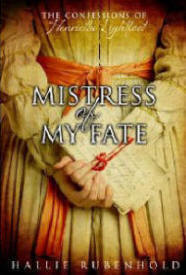
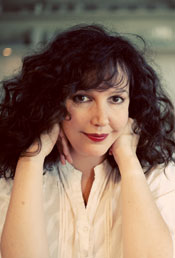
| 7. Hallie Rubenhold August 2011 Historian Hallie Rubenhold might fairly be accused of somewhat single-mindedly specialising in Georgian naughtiness. Her first book was The Covent Garden Ladies, about the famous guidebook to prostitutes. Then came Lady Worsley’s Whim - An Eighteenth Century Tale of Sex, Scandal and Divorce. There was also a TV program about The Covent Garden Ladies, which Hallie presented, and she was a historical consultant for the Channel 4 series City of Vice. Now just out is Mistress of My Fate, a novel, and a new twist of the innocent-comes-to-London tale. I liked it, a lot, and there's just enough Venetian connection (revealed below) to sneak her onto this page. Her website is here. |
 |
| What inspired you to try
your hand at fiction this time? The plan had always been to write fiction, not non fiction. As an academic it was expected that I write non fiction, but in fact, I find non fiction more difficult to write because I have to rein in my imagination. This move into fiction was a very natural one, and something that I’d wanted to do my entire life. Your central characters are invented, but based on real people, and the rest are real people, fictionally fleshed out. How do you decide where to set the factual/invented divide? This is an interesting question. I feel that central characters need to possess enough flexibility to be taken into situations where actual historical characters may not have ventured, though it’s important to anchor their experiences in reality. I’ve tried to do this with my central characters, especially with Henrietta. Her character is drawn from an eighteenth century template; she’s the quintessential well-brought up young lady. She’s part Jane Austen heroine, part Fanny Burney heroine, and also inspired by real teenage girls whose correspondence and memoirs I’ve read over the years; from fallen young women who appear in court cases and cautionary tales, to the daughters of the aristocracy. Would you describe the book as an historical romance? Or am I just asking this question because I'm a librarian and obsessed with classification? You’re asking this question because you’re a librarian and obsessed with classification. No, I tried not to make it an historical romance, though it does possess romantic elements. I think it’s fair to say that most writers would agree with that love is an excellent well from which to draw the best human drama. However, I wouldn’t call Mistress of My Fate an historical romance any more than I would call The Crimson Petal and the White an historical romance. Can you confirm the rumours that Henrietta Lightfoot's later career took her to Venice. Yes! Look out for book three which will take place between Rome, Naples and Venice! |
|
|
|
|
||
| Do you have a film/book/artist
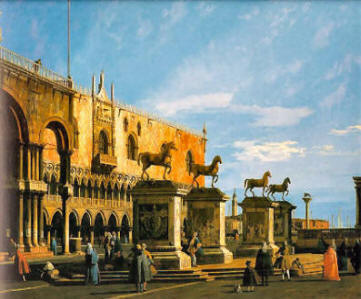
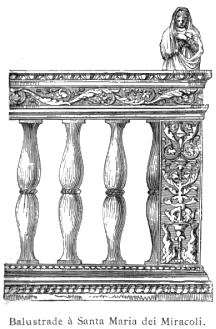
that made a visit to Venice essential for you? I think that by the time I first made it to Venice, I had wanted to go there for so long, that I’d forgotten which image/film/book had originally stuck in my imagination, though Canaletto did factor pretty highly. Do you remember your first visit? How could I forget it! I went InterRailing when I was 20. It was over the Easter holidays and, much to our disappointment, we found that all of the youth hostels were full. It was a choice between sleeping in the train station or somewhere else. The train station idea was quickly (and wisely) shot down. We ended up staying in pensione in Padua and commuting in. What is your single most magical experience in Venice? As clichéd as it sounds, there have been times when being in Venice has been so overwhelmingly astounding that it’s reduced me to tears. There are moments when the breath-taking beauty of the city defies description; the way the sunlight and shadow catches certain buildings, the majestic views that rear up from around a corner, the sudden flight of birds as bells toll out through the squares, the gentle sound of water, the unexpected music floating through courtyards – and sometimes, all of this strikes you at once! Venice can be the very essence of what the Romantics defined as the sublime; something so awe-inspiring that it can only be felt and not intellectualised. Certainly my most magical experience fell into that category. Several years ago, I arrived at night and took the Alilaguna from the airport across the lagoon in the middle of a lightning storm. The water and sky seemed entirely flat and black, but every now and again, great forks of lightning illuminated the silhouette of the city, accompanied by the roar of thunder and gothic clanging bells. It felt like something straight out of Mary Shelley! And your worst? I’m pleased to say that even the worst of my experiences in Venice doesn’t really rate against other travelling disappointments. I suppose my worst experience was when my husband and I planned a week long trip and then the trial on which he was working ran over, and I had to go alone. But when life gives you lemons in Venice, you make a spritz. I spent my week walking and thinking, and from that period of peaceful reflection, the concept for the Confessions of Henrietta Lightfoot series was born. In fact, I started writing it in the flat we’d hired near the Giardini Biennale. Last year, I went back on my own to finish what I’d started, and completed writing Mistress of My Fate in Venice. Where would you live in Venice? And why? Somewhere in the Dorsoduro, probably close to the Campo Santa Margherita. The Dorsoduro feels a bit more removed from touristy Venice while still being in the centre of things. Also, one can get a sense of life running at a more authentic pace, rather than being dictated by the ebb and flow of cruise ships depositing visitors. More importantly, there’s a fair collection of practical shops around that area, including a supermarket. If you’re there for a long stint, shopping for necessities in Venice can be absolute hell. Is there a book (guidebook or not) that you always have to take? I know I’m meant to say The Stones of Venice, or something deeply inspirational, but I’m afraid I’m dull enough to say the Time Out guide, which has never failed me. The Michelin red guide has also come in pretty useful. What music plays on your iPod (or in your head) when you walk around Venice? Again, it seems almost like a joke to say Vivaldi, but...Vivaldi. As a huge fan of baroque music, I discovered Vivaldi long before my first visit to Venice, and only when I came to Venice did I actually put the two halves together: Vivaldi and Venice, like bread and butter. Vivaldi is quite literally the city’s soundtrack. He has somehow managed to infuse his compositions with the sound of lapping, flowing water, and long dark shadows. But I’m not talking about the Four Seasons, which is played ad nauseum wherever you go. My favourite pieces are the lesser known concertos or arias from his operas and choral works such as Zeffiretti, che sussurrate, which quite literally gives me shivers when I listen to it in Venice. Do you have a favourite... ... Part of Venice I genuinely love it all, but the Dorsoduro is probably my favourite. ... Restaurant In terms of food and Venetian ambiance, Alle Testiere is amazing. The best razor clams I’ve ever had. ... Church Probably Santa Maria dei Miracoli, but with each return visit to Venice I invariably discover another one, just as beautiful. ... Gelato flavour Depends where it’s from and what I’m in the mood for. I do love cannella e miele. ... Pizza topping No one should eat pizza in Venice! But fritto misto or a lovely plate of little brown shrimps somewhere on the Zattere is another story. And what's your least favourite aspect? Having to carry heavy bags of groceries back to wherever I’m staying over endless bridges and in heat/rain/high water. Ditto luggage. No matter how much anyone loves Venice, it can never be called a practical city. Do you think that Venice is dying/drowning? I would say Venice is changing rather than dying. It’s not what it was two hundred years, one hundred years ago or even fifty years ago. In terms of conservation, this is never a good thing but conservationists know they’re in the business of fighting losing battles. I think it’s terribly sad that rich property owners have pushed out ordinary Venetians, but where the actual city is concerned, I’ve often had to stop myself joining the choir of moans about how it ‘no longer is what it once was’. Of course it’s not; Venice was once a city of extreme poverty and squalor. We tend to be dazzled by the incredible scenery and forget this rather important aspect of its history. Read any account of travel to Venice in the 18th or 19th centuries and a shocking picture of deprivation emerges from between the palazzos and stunning churches. In the later part of the twentieth century, modernisation improved life for everyone – including Venetians. It’s also worth remembering that until the later part of the twentieth century, Venice was only visited by the rich; those who could afford to travel. Now travel is relatively inexpensive and ordinary people get a chance to see an extraordinary place, which earlier generations would have never dreamed possible. So, when we moan about Venice having changed, would it be better if no one but the very rich were able to see this awe-inspiring place? Would it be better if Venice remained a city plagued by disease, poor drainage and peopled by ‘charming’, threadbare fishermen and their families? Just which Venice are we hankering after? Of course Venice has changed, and will continue to in order to accommodate what’s occurring in the world beyond it. However, it’s incumbent upon us to get the balance between change and conservation right so that this priceless gem is never lost to anyone. If you were Mayor of Venice for one day, what would you do? Throw the largest and most successful Venice in Peril fundraiser ever seen! |
|
|
| 6. Robin Saikia
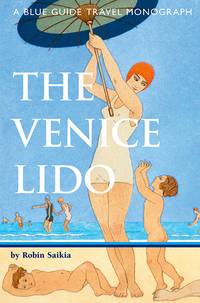
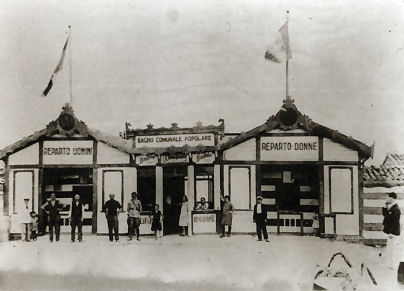
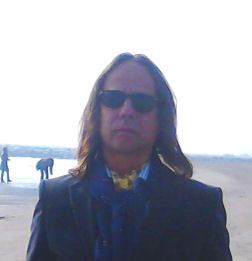
July 2011 Having written Blue Guides to Literary London, Italian Food and Hay-on-Wye Robin Saikia has now let himself go with his new book, called The Venice Lido. In it he revels in the Lido's history of decadence and romance, and also makes the case for it being more than a mere resort. He does this also in an evocative video on YouTube. |
 |
|
So, Robin, why the Lido? |
|
|
|
|
||
|
Do you have a
film/book/artist that made a visit to Venice essential for you?
Do you remember your
first visit?
What is your single
most magical experience in Venice?
And your worst?
Where would you live
in Venice if you could choose? And why?
Is there a book
(guidebook or not) that you always have to take?
What music plays on
your iPod (or in your head) when you walk around Venice?
Do you have a
favourite...
…Restaurant
…Church
…Gelato flavour
…Pizza topping
And what’s your least
favourite aspect?
Do you think that
Venice is dying/drowning?
If you were Mayor of
Venice for one day, what would you do? |
|
|
|
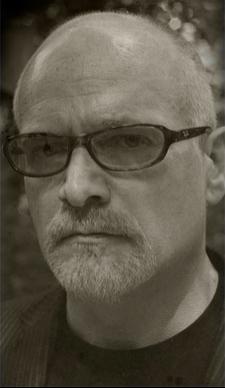
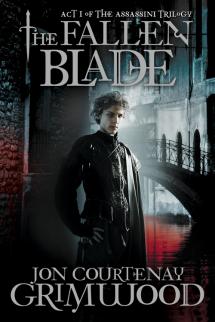
5. Jon Courtenay Grimwood March 2011 Most famous for his Arabesk trilogy of cyberpunky novels set in an alternative and noirish Alexandria, JCG writes books set in worlds where history has taken major turns very different from developments in our own. He has just embarked on The Assassini, a series of novels set in a renaissance Venice unlike any we've read about before. And we like. He also knows (and loves) his Venice, unlike some Google-travelling authors we won't mention. His website is here. |
 |
| Deciding to set a supernatural
fantasy novel in renaissance Venice...which came first, the decision about
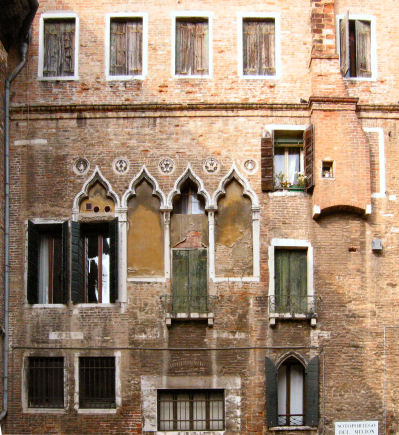
the genre or the setting? A naked boy chained to the bulkhead of a ship came first. It took me a while to unpick what I was seeing and when I realised the ship was in the Venetian lagoon I had my location. What he was - in as much as Tycho and I know what he is - came when he opened his eyes and I saw the amber flecks. All of my novels begin with a single image. My first published book was a crime novel, that turned out to be a SF crime novel set in Paris when I realised the blue cop cars behind the prosecutor were hovercraft parked above the Seine. Until then I thought it was a straight crime novel. I doubt that you were going for the Twilight market, but am I misguided in still detecting a certain fashionable flavour of the 'young adult' novel in the book? It's not intentional although this is the first book that has been blogged by teen bloggers and the first one where I've had teen interviewers asking questions. (So obviously there's some cross over.) YA novels do some things incredibly well and I've long believed you can get away asking harder questions and dealing with more difficult subjects in YA novels than in most lit fic. That said, there's some really quite brutal stuff in The Fallen Blade so if people in their young teens comes to it from the Twilight market they'll probably be slightly shocked. There is a lot of authentic Venetian detail in the novel, but you also make up some places and change the names of some things, like gondolas. Why the need for this giving of other names? The boat names at least should be real; gondolini are racing gondolas, vipera are low double fronted smuggling craft. At one point I had seven or eight different types of Venetian craft but most were cut at editing stage. Very occasionally I've renamed an alley or a church or made a fondacio that belonged to one country in 1407 belong to another instead. I've done this for the same reason Alexandrian names were changed in the Ashraf Bey/Arabesk mysteries - to make obvious that this Venice is not *quite* the Venice we know. (Although, obviously, all cities are overlays of the city or cities we recognise and those we don't know exist because we don't recognise them.) In the Fallen Blade the world is five generations into a new time line and it's one where Marco Polo's descendants are hereditary dukes, the Mongols have a trading station in Venice and the Byzantines are still a major power. What fascinated me was how much Venice still looked to the East in this period while resenting its Byzantine origins. I wanted to build on that. Are the sequels going to be set in Venice too? When's the next one due? The next book is written and takes place almost entirely in Venice, with slight side trips to the Lido and Monfalcone. The one after that is again mostly Venice, with some scenes on the outer edges of the lagoon. |
  |
| Do you have a film/book/artist
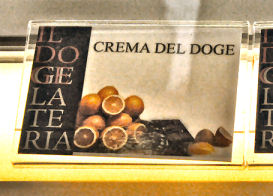
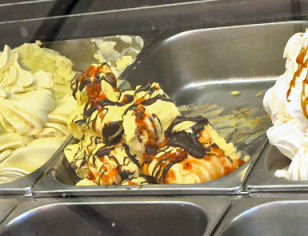
that made a visit to Venice essential for you? The Aurelio Zen books make me want to visit Venice and I'm a sucker for anything by Donna Leon, but I suspect that's because I like Venice rather than the other way round. Don't Look Now captures the sinister side. Even if it wasn't a great film I'd re-watch The Talented Mr Ripley just for the Venice scenes. (I'd even re-watch Brideshead). And I still walk around quoting Robert Browning's Toccata of Galuppi's to myself. 'Yes, you, like a ghostly cricket, creaking where a house was burned: Dust and ashes, dead and done with, Venice spent what Venice earned. The soul, doubtless, is immortal - where a soul can be discerned...' But there's nothing that has made a trip essential Do you remember your first visit? No, my childhood memories of the city merge into one. I can remember the usual things; the heat and the stink of the back canals, the crowds in San Marco, the sudden relief of finding completely empty alleys a hundred yards back from the main thoroughfares, vaporetto, gondolas, ice-cream, but the first trip...? If I've got the memory right we were driving home from Valetta in Malta to the UK and stopped off for while. I'd have been about six. What is your single most magical experience in Venice? Walking in the dead of night through the back alleys of Castello and coming out onto the fondamente and seeing lights in the distance and feeling the centuries drop away and knowing could have been in any one of the previous thousand years. I can get almost drunk on history in that city. And your worst? Right, I'm going to take my wife's name in vain (Sam Baker, editor-in-chief of Red, good novelist). She's the least superstitious person I've ever met but last year we booked into a very old hotel in Cannaregio, had a furious argument, went for a walk to calm down, went back to hotel and promptly started another argument, then spent the night awake with my wife insisting someone else was in the room and she could hear a small child crying. We booked into another hotel and had a really good weekend thereafter. The owner of the first hotel asked which room we'd been given and didn't even seem surprised when we refused an upgrade to a suite and said we'd be happier staying elsewhere. (We decamped to Ca' Pisani) As a child I decided the reason Venice felt so strange was because none of the ghosts could escape across the water, and so there were always more ghosts than living people in the city. I also think I was shocked by the churches and palaces with their dark oil paintings of tortured saints and decided people in Venice had obviously been nastier to each other than elsewhere. Where would you live in Venice if you could choose? And why? A ruined palazzo on the Grand Canal sometime in the 1950s, with water on the lowest floor and crumbling furniture... Failing that, one of the really narrow alleys just beyond the Oratorio dei Cruciferi, in Cannaregio, running south from the Fondamente Nouve would be my choice today. (Preferably an alley that involved crossing a couple of bridges and didn't actually lead anywhere, unless to a deserted corte.) Much as I love the walk from San Marco down to Sant Elena and do it every time I'm in the city, I think the bleakness of the northern shore is more interesting. Is there a book (guidebook or not) that you always have to take? I have a 500 lire black and white early 60s guide book to the palazzo ducale with terrible monochrome photographs and blocky little maps that has acquired an almost talismanic quality for me. I'd be more upset to lose than than the rest of my luggage put together. What music plays on your iPod (or in your head) when you walk around Venice? My ipod is always on shuffle! My head is usually full of conversations between characters about the areas through which I'm walking. I'll stop if I hear music coming from a church and sit for a while. So mostly I go with what the city supplies. Vivaldi features quite heavily! Although I did listen to Gregorian chant for the Assassini books. Do you have a favourite ... Part of Venice At the moment, the northern edge between the vaporetto stops of Fondamente Nuove and Sant Alvise. ... Restaurant Hard this... For every meal at Harry's Bar I've had dozens that are simply bacaro stops, chances to read or because I want a drink and food seems like a good idea. I've eaten regularly at at the cafes in Santa Margherita, tried Ai Assassini in Rio Tera dei Assassini, which mixes locals with tourists, and has a great name (given the books how could I not eat there), used the back table at Brek on Lista di Spagna as afternoon office space for a week (food varies wildly, cheap and good to congealed and inedible). Pizzeria Ae Oche does reasonable pizza, including seriously-hot but totally inauthentic tabasco pizzas if your taste runs that way and gives you a great walk in the half dark along the Zattere afterwards. (And I had one of the best arabiatas I've ever eaten in a tiny place off the Strada Nova.) ... Church I love San Zanipolo. It's huge, impressive, stark, full of dead doges and gives a real sense of the city's greatness. But my favourite is the basilica's poor cousin San Pietro de Castello... The city's main cathedral for centuries and featuring a Palladian facade, it still needed rebuilding in the 1970s having been ignored and fallen into repair after it was firebombed fifty-something years before. There's something grandly forlorn and Miss Haversham-ish about the building and it's where I go these days to light candles when I'm in the city. The 13th Century Throne of St Peter has verses from the Koran inscribed on the gravestone that's been cut down to make a backrest. This kind of unintentional rubbing together of cultures really interests me and drives most of my books. ... Gelato flavour The crema del doge flavour from the ice cream place on the southern edge of Campo Santa Margherita (just look for the queue) ... Pizza topping bresaola & rocket And what's your least favourite aspect? The crowds of tourists pushing down from Ferrovia to San Marco and back in a huge wave, the fact the quality of the food is so erratic, the occasional idiot waiter who tries to give you the wrong change on purpose, the fact you know you've keeping the city alive by going and spending money and killing it and its culture by being there. It's a place of very mixed emotions. Do you think that Venice is dying/drowning? Yes, definitely dying. It's been dying from the moment it was born which is why it's so glorious. The fact it exists at all is absurd. And with luck it will go on dying for another thousand years if not longer. Will it drown? Would the world let Venice drown? I don't know. If you were Mayor of Venice for one day, what would you do? Declare independence, re-establish the Council of Ten, distance myself from the politicians in Rome and declare the period from 1797-2011 an unfortunate blip in an otherwise glorious history (then play off the major powers for aid and loans to get the republic back on its feet). |
|
|
4.
Miranda Miller
January 2011 A small departure here. Miranda Miller is the author of Nina in Utopia which isn't set in Venice, but which was one of my most favourite novels of 2010. She made contact a few weeks back and confessed a love of Venice, so she qualifies I think. Nina in Utopia tells of a Victorian woman mysteriously propelled into modern London. Despite the sci-fi scenario the novel is more about morality, modernity and love than airships and anomalies. Here website is here. Being a fan of steampunk (the sci-fi genre where old (usually steam) technology has developed sufficiently to create brass robots, superior airships and such) my first question was... |
|
| Nina in Utopia has elements of
steampunk and even features that most mainstream of recent mass-cultural
flirtations with the genre - the Sultan's Elephant. Were you conscious of
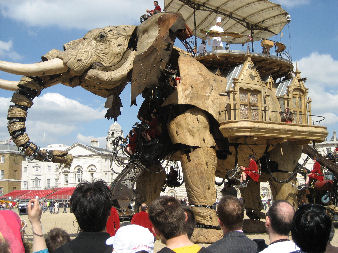
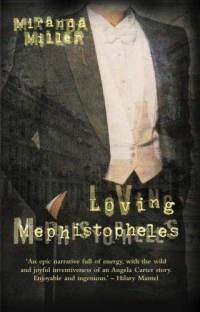
this connection when you wrote the novel? I haven't read any steampunk but would appear to be living in a parallel universe. I saw the Sultan's Elephant just before I started writing Nina in Utopia. I had done a lot of reading and research but needed to find a 'door' into our period for Nina. I chanced upon that exuberant piece of street theatre and wondered how my Victorian woman would feel if she found herself in that crowd. Why have there been so many novels written recently with a Victorian setting, do you think? I can't speak for authors in general but I have read so many nineteenth century novels that it felt quite natural to be writing in Nina's voice. I would hesitate to set a novel in an earlier period, for example the seventeenth century. At the moment I'm reading Claire Tomalin's wonderful biography of Pepys and am struck by the fascinating strangeness of the London she describes. Victorian London, however, has been alive in my imagination for most of my life. The language is also quite familiar and not so very different from our own. There's also a resistance among authors to tackling the modern world and its trappings - mobile phones, the internet, etc. Is this just cowardice or a desire for the classic and the timeless? You may well be right, Jeff, when you suggest there's an element of cowardice in writing about the past at a time when our present is so confusing and alarming. Twenty years ago I wrote a novel called Smiles and the Millennium which was an attempt to predict what Thatcher's policies would do to London by the year 2000. Some of my predictions - the widening gap between rich and poor, inflated house prices - were accurate. When I wrote that novel I felt far more confident than I do now that there were political solutions to these problems, and that things would get better when we voted Thatcher out. They didn't. I am considering writing a novel set in London in the present but will probably not resist the temptation to slip into the past as well. The first novel in which I attempted to explore different historical periods was Loving Mephistopheles. This is a quirky take on the Faust legend: Jenny is a third rate chanteuse who signs a contract giving her eternal youth with her agent, Leo, aka Mephistopheles. The novel is set between the 1890s and the end of our century and I felt liberated from the restraints of both realistic fiction and historical novels which stick to one period. As you know, in Nina in Utopia Jonathan uses computer dating and sees Nina's ghost on his computer screen at work. I think it would be hard to set a novel in this century without mentioning the internet. For me, the most entertaining aspect of writing that novel was the imaginative challenge of bringing the two periods together. It takes time to write novels and, unfortunately, to get them published. I'm sure that novels will eventually catch up with technology. After all, it may be that the future of fiction lies on the internet, not in bookshops and libraries.
|
|
| Do you have a film/book/artist
that made a visit to Venice essential for you?
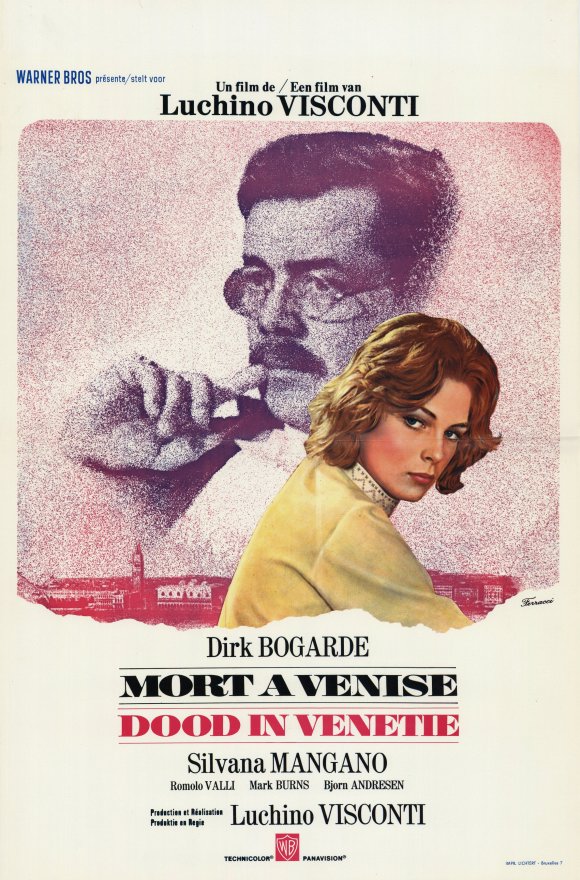
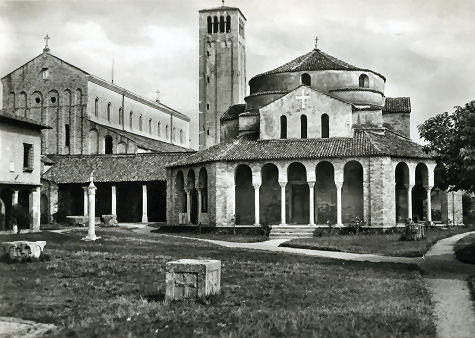
Do you remember your first visit? I was lucky enough to visit Venice for the first time when I was ten, with my family. My most vivid memories are of drinking chocolate on a terrace overlooking the Grand Canal; climbing up into the mysterious and ancient roof of San Marco; and standing in the Piazza San Marco feeding the pigeons, which then seemed adorable rather than repulsive. So my experience predated any exposure to films, books and paintings. By the time those came my way I was already a confirmed Italophile. Death in Venice - both the novella by Thomas Mann and Visconti's film - and the various incarnations of Venice in the works of Henry James are my most internalized associations with Venice. As I wander the alleys, happily lost, I hear in my head Mahler's music, used as the soundtrack for Visconti's film. What is your single most magical experience in Venice? My most magical memory is of chugging down a back canal on a vaporetto with my partner, Gordon, who was seeing the city for the first time. The boat swept out onto the open sea and the golden silhouettes of domes and towers welcomed us. And your worst? My worst memory is of a solitary visit one November in the 1970s. It was foggy and I got hopelessly lost in the deserted alleys. The canals became distinctly menacing and I realised how easy it would be to fall in or be pushed by a malignant ghost (or mugger). For hours I stumbled around, probably going in circles, and a terrible melancholy seeped out of the damp stones. Where would you live in Venice if you could choose? And why? Actually I wouldn't choose to live in Venice because I love living in London. But I wouldn't say no to a flat at the top of the spiral staircase in the Palazzo Contarini del Bovolo, overlooking the garden. Do you have a favourite … ... Part of Venice I particularly love Torcello (see right) with its tiny cathedral, grassy campo and Ozymandiaslike atmosphere of fallen splendour. Last time I was there, in 2009, a man was sitting alone in the garden of one of the few houses there with a chessboard in front of him. We smiled and waved at him and he asked if we wanted a game of chess. We continued on our way to the ferry but later thought that we should have stayed and kept him company. There was a Vendesi sign on his house, so perhaps the solitude became too much for him. ... Restaurant Gam Gam, a Kosher restaurant near the Guglie bridge which has delicious food and is friendly. It's all too easy to eat badly in Venice so I also have many unfavourite restaurants. ... Church My favourite church is, unsurprisingly, San Marco. I fell in love with it when I was ten and no church I have seen since has surpassed it. ... Gelato flavour Pistachio ... Pizza topping Fiorentina And what’s your least favourite aspect? My least favourite aspect is the paradox that the most beautiful city in the world has a generally low level of culture. The Biennale (obviously) only happens every two years. In September 2009 we longed to hear music other than Vivaldi's Four Seasons, to find a really good bookshop or an interesting play or opera production. Do you think that Venice is dying/drowning? Venice may be rescued from sinking but the city is depopulating and has no income other than from tourism, which is destroying it. Most Venetians hate tourists, and it shows. As I said earlier, I don't think Venice is really part of Italy but should be regarded as a miraculous jewel of civilization. If we allow it to die we will all be impoverished. If you were Mayor of Venice for one day, what would you do? If I were Mayor of Venice for one day I would try to find an international solution to the city's problems. Artists, like Venice, are endangered. I would sell the derelict properties at affordable prices to artists, writers, musicians, filmmakers and cultural organisations, on condition that they lived there permanently, not just for holidays. They would keep their original passports but would also become citizens of Venice so that they felt committed to the city's future. I would strictly limit the number of tacky souvenir and carnival mask shops and encourage local food shops, art galleries, bookshops and music venues. As the population increased, ordinary street life would return and taxes would be paid, so that the most crass solutions, like the advertising hoardings that masked the Piazza San Marco and the Bridge of Sighs on my last visit, would not be necessary. The city would attract more discriminating visitors and perhaps this unique city would find a unique twenty-first century role to play. But I won't be applying for the job just yet! |
|
|
Henry James famously said, in 1909, that
there was nothing new to be written about
Couldn't have been wronger. I must have been to Venice a good 200 times, and I find something new every time I go. There are still countless historical mysteries to be solved. Do you think that there are still aspects or periods of Mysteries, yes; aspects or periods, not many. I agree about WW2 Venice (but see below). And there's more work to be done on the first 3-4 centuries of its history. For the rest, I think it's pretty well covered. Do you read much fiction set in Quite a lot. Joseph Kanon's thriller Alibi, which I read a week or two ago, is interesting on immediately post-war Venice. It's an odd book; for most of the time he suggests that he knows the city like the back of his hand, but he seems to think there's a parish called S. Ivo - I think he means S. Vio* - and insists on referring to S. Maria in Formosa. I couldn't write a novel for nuts - no creative imagination. All I can do is report. (* Your smug site-creator says: 'I spotted this too!' See review here) Have your researches ever been annoyingly frustrated? Do you have any tales of adventures amongst the archives? Only by being unable to find an answer to a question that's bugging me. I have hardly worked in the archives at all; virtually all my research has been done in the London Library. |
 |
|
|
|
||
|
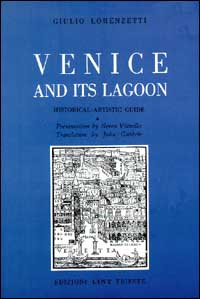
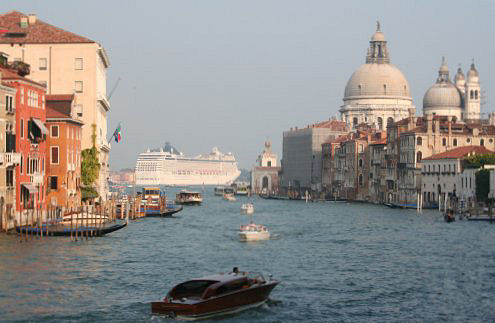
Do you have a film/book/artist that made a visit to No - I got to know Venice aged 16 by going there. The films/books/artists came later. Do you remember your first visit? Very, very clearly. I went with my parents for the day from Lake Garda and fell in love at first sight. What is your single most magical experience in Oh dear, I've had so many. I think I'd rank gondola trips at night around the small canals highest of all - that's when you see the city at its most magical. And your worst? Being taken on a three-hour tour of the lagoon in a motoscafo in pelting rain - all the windows fogged up so nothing to see. Where would you live in In the heart of the city - somewhere round Campo S. Angelo or S. Stefano, so that I can walk in 5-10 minutes to almost anywhere I want to go. Is there a book (guidebook or not) that you always have to take? Lorenzetti of course, and perhaps Jan Morris. What music plays on your iPod (or in your head) when you walk around NOT those Four bloody Seasons. Do you have a favourite … ... Part of ... Restaurant Al Covo - next to the Hotel Gabrielli. ... Church S. Maria dei Miracoli ... Gelato flavour Banana ... Pizza topping Margarita, with extra cheese And what’s your least favourite aspect? Summer tourists. Do you think that Dying yes (very slowly); drowning, no. If you were Mayor of Venice for one day, what would you do? Ban leviathan cruise ships, and slap a walloping charge on all cruise buses. Everyone should be allowed to come to Venice, but they should find their own way there, like we all used to. |
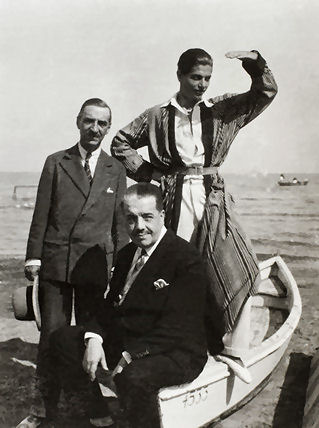
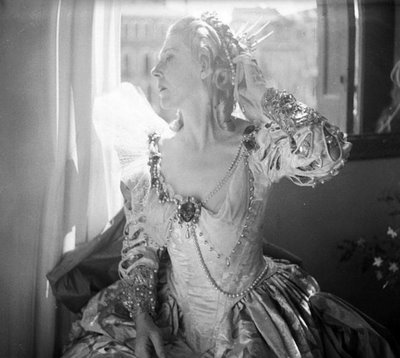 John Julius's mother, Lady Diana Cooper, dressed as Cleopatra at a lavish ball in the Palazzo Labia given by Don Carlos de Beistegui in 1951. The costumes were inspired by the palazzo's Tiepolo: The Banquet of Cleopatra.
|
|
|
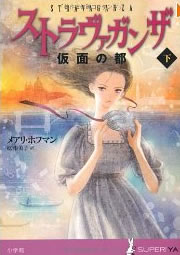
2. Mary Hoffman
May 2010 Mary is the author of many magical novels for children of all ages. Recently Trobadour, set in the time of the Cathars, was nominated for the Costa, among other prizes. She's also a vegetarian who likes cats, as you can see on her website. As if this wasn't enough to recommend her to us, the first in Mary's Stravaganza series is set in Bellezza a subtly different, and often temptingly improved, version of Venice. It's one of my very favourite Venice-set novels. So it's a good place to start. |
 |
|
What was the idea behind your setting City of
Masks in a fictional Venice, called Bellezza? On my first visit to Venice, which was a day trip from where we were staying at Lake Garda with our three teenage daughters, we were cajoled into taking them on a gondola ride. It was fantastically expensive – more than the rail fares for all five of us there and back from Desenzano – and I started musing about what would have made it worth all that money. Perfect weather for a start: it had started to drizzle from a grey sky. And then perhaps a really handsome gondolier. Ours was perfectly pleasant and reasonably knowledgeable but he was middle-aged, balding and paunchy. I started fantasising about a city just like Venice where all the gondoliers were under twenty-five and absolutely stunning. How could this be? Well, if they were chosen by a woman. What woman could have such power? The ruler of the city. But Venice never had a woman ruler. All right then, not Venice but a city like it in a parallel universe, where the elected ruler is a woman. |
||||||
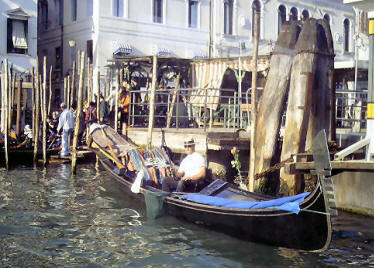 This is how stories begin with me: an idea and then a question and answer session with myself until the core of the idea is ferreted out. Venice had a Doge, which is Venetian for Duke, so my Bellezza (="beauty" of course) had to have a Duchessa. And to make it more interesting, although the parallel world bit would be set in the 16th century, there would be a 21st century traveller to it. When I looked at the idea five years later, when I was staying on the Venice Lido, I found that my unconscious mind had worked away and produced Silvia, the Duchessa of Bellezza and Lucien Mulholland, the 21st century teenager who would travel to meet her. HUGE SPOILER FOR ANYONE WHO HASN’T READ CITY OF MASKS ! Death in Venice is a common concept, but you have your character dying elsewhere to live in Venice. Was this a conscious reversal? Does it reflect your idea of Venice, maybe? Absolutely not! I hadn’t thought about that till you asked. I don’t buy into Venice as the disease-ridden world Thomas Mann wrote about, in spite of having enjoyed Dirk Bogarde as von Aschenbach and Benjamin Britten’s opera. The Bellezza of my secondary world, in the country of Talia, is about beauty and yes of course masks. In fact the book was going to be called Where Beauty Wears a Mask and the city’s motto is “BELEZZA E MONETA” which might mean Beauty and Money or Beauty is Money” depending whether there’s an accent on the “e”, which there might not be in capital letters. |
||||||
|
|
|
|||||
|
|
||||||
|
Do you have a film/book/artist that made a visit
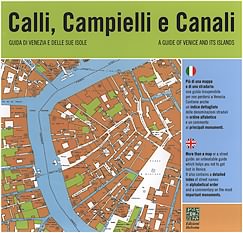
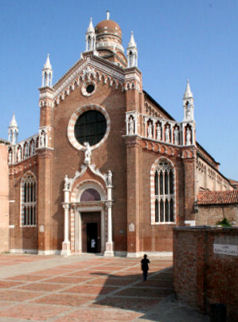
to Venice essential for you? Someone said that no-one ever sees Venice for the first time. I just can’t remember where I first learned about it but I think of two things. My older sister had a memorable visit there when she was young. (And I spent a month in Florence when I was 20 so thought you had to be a “Venice person” or a “Florence person” – wrong!). The second thing was reading Henry James The Aspern Papers at university, which is set in Venice. Do you remember your first visit? Yes! See above under the inspiration for City of Masks. I had terrible toothache at the time which might have made me less tolerant of a less-than-handsome gondolier. What is your single most magical experience in Venice? Ah, so many! Seeing a gondola glide past the window of the café in the Doge’s Palace, going to a masked ball laid on by Bloomsbury, having breakfast in the Danieli roof terrace with Barbara Trapido, finding the boarded-up theatre that I used in City of Masks and many, many more. And your worst? Finding a MacDonalds! Where would you live in Venice if you could choose? And why? Without a doubt somewhere in Cannaregio. We rented an apartment there once, overlooking a little side canal. It was so peaceful and we shopped for food in the market like proper Venetians. Is there a book (guidebook or not) that you always have to take? Calli, Campielli e Canali What music plays on your iPod (or in your head) when you walk around Venice? Gracious! I don’t have an iPod and don’t associate any music in particular with Venice except perhaps Monteverdi Vespers of 1612. I suppose I should say Vivaldi’s Stravaganza violin concertos but I’ve never listened to them there. Do you have a favourite … ... Part of Venice Cannaregio. I also love Torcello. ... Restaurant I’ve never found a really good one. I’m a vegetarian, which makes it a bit harder. But I don’t think one goes to Venice for the food. It’s not like Bologna or Florence. ... Church Madonna del Orto ... Gelato flavour Nocciola, gianduia e caffè ... Pizza topping Carciofi And what’s your least favourite aspect? Acqua alta! Do you think that Venice is dying/drowning? I’m not qualified to say. If it can be saved, it will be because it has such a special place in so many people’s imagination. If you were Mayor of Venice for one day, what would you do? Retire all gondoliers over 25 of course! |
  |
|||||
|
|
||||||
|
|
 |
|||||
|
Yes, I enjoyed writing Minguillo, loved it - to an extent which might worry people. But who doesn’t long, sometimes, to pull on a black cape and swish it about, and twirl one’s moustachios and mutilate the innocent? Oh, sorry, not you? I got you wrong, Jeff. |
||||||
|
(Your affronted
site-creator says 'Indeed!') Another historical novel – do the plot possibilities of mobile phones, distant travel in less than 6 months, and the internet not appeal at all? You’ve answered your own question. How can you have a plot to unravel when there’s Wikipedia? How can you get into serious physical peril with a mobile phone? You’ve just embarked on a series of books for young adults, does the idea of developing a series for adults tempt you? In a way, I have. The portrait-painter Cecilia Cornaro has so far appeared in three of my novels. She’s completely real to me, and there’s a lot more mileage in her yet – as a bit-player in other people’s stories or in a more major role. She is the equivalent of a photographer, too, a way of recording the faces of all my other characters. I have a role in mind for her son, Girolamo, in a forthcoming book. Your next book for adults? Having done skin, I’m extremely interested in … hair. |
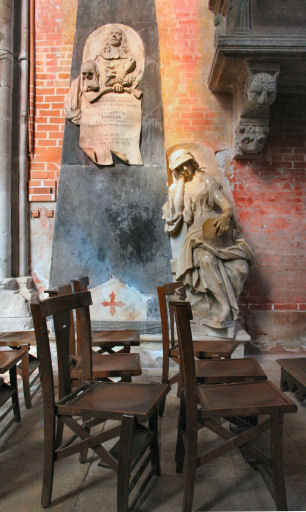
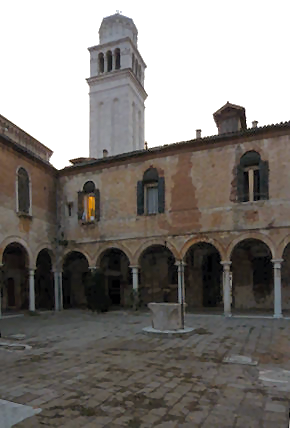
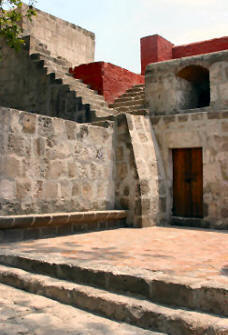 Photos of Santa Catalina by Graham Morrison |
|||||
|
|
||||||
|
Do you have a film/book/artist that made a visit to Venice essential for
you?
Do you remember your first visit?
Is there a book
(guidebook or not) that you always
have to take? |
 |
|||||
|
|
||||||
|
And what’s your least favourite aspect? |
 |
|||||